Sunday, November 19

life-based pursuits

Life-based activities are things we can do because we are alive. They include, for example, appreciation, empathy, friendship, love, art, music, dance, sport, parenting, looking, listening, smelling, touching, tasting, thinking, meditating, scholarship, service, etc.

Rather than diminishing with use, life-based activities tend to become stronger and more rewarding through use.


While industry is always eager to sell material accessories, life-based development tends not to require much material resources, and is not likely to inspire organized conflict. Quite the contrary. By developing human potentials, we increase our personal satisfaction and simultaneously reduce our territorial and material needs, thereby reducing the threat we might pose to others.

The more we develop our skills and abilities the more we can help others to do the same. Sports, music and other creative activities give pleasure to both participants and observers. As we develop our own inner calm, we can help others find calm in their lives. As we increase our understanding, we can help others to understand.


The satisfaction derived from life-based activities is far greater, proportional to the material required, than from inessential material consumption. The prospects for the future improve when we place more value on what we can do with our lives, rather than on the quantity of the goods we consume. If the material accessories can be avoided, a shift to life-based activities would go a long way to ease environmental distress and enable the restoration of ecosystems health.

Exerpt from: Life, Money and Illusion by Mike Nickerson

Note: If you are a NZ resident and would like a copy of this book,
please leave a comment here - as I hope to place a bulk order soon.

Saturday, November 18

first time in living memory

I just came back inside after stepping out to feel the wind that has been howling for most of the night. It is gusting over 60Km/hr, as measured by my handheld wind meter. While it is not as strong as the 120Km/hr winds of nine days ago, which shut down the Telecom Tower in the city, it is still far more than I recall.

The words, "So you don't believe in climate change?" popped into my head. I have a feeling that these more extreme weather conditions are not about to become less common anytime soon.

It prompted me to search a little of the weather records and I stumbled across this article that just came in:

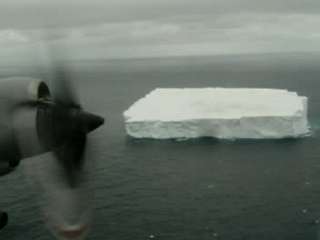
Nov 17th, 2006: An iceberg has been spotted from the New Zealand shore for the first time in living memory. Courier Mail


Scientists are trying to determine where it and several other giant chunks drifting in the country's waters originated from.
Last year, icebergs were seen in New Zealand water for the first time in 56 years, but couldn't be seen from the shore. On Thursday one was visible from Dunedin on the South Island. It has since moved away, driven by winds and ocean currents.

The floating ice blocks have become a tourist attraction, as sightseers pay up to $NZ500 ($435) each to fly over the icebergs.
Theories about where on the Antarctic coastline the icebergs originated have gripped the science community.

Wednesday, November 15

China steps up

"As China grows -- at the current rate it's growing, in twenty or thirty years -- and becomes the number one largest economy in the world, I think China may become our nemesis."

Former US Secretary of Labor Robert Reich on NPR's "Marketplace" show.


And here is a response to this statement, from unknown source:


One would think that Mr. Reich is a pretty smart guy -- former Rhodes Scholar (same class as Bill Clinton), Harvard faculty, cabinet secretary. Now, why on earth would Mr. Reich believe that China can possibly keep behaving the way it does for another two or three decades? China faces energy starvation along with the rest of the world.

China has less oil left than the United States (and the US would have roughly four years worth of oil if we were deprived of imports -- 26 billion barrels used at the rate of 7 billion a year).
There is no way that China can put another one half percent of its population behind the wheel of a car without sending its army and navy out to seize foreign oil fields -- let alone continue manufacturing toasters and Christmas tree ornaments for Americans. And Americans are not going to have the the cash to buy those things, whether or not we are actively engaged in a war for the world's remaining oil. And all this trouble is going to play out in the next decade, not in "twenty or thirty years."

Near the end of the segment, Reich repeated this inanity:
"As China, over the next twenty, thirty years, grows and prospers, a lot of Americans are gonna say, now, wait a minute. . . ! The endgame, we hope, is more and more economic integration, a Chinese middle class that is more and more prosperous, that is able to buy things from the United States, that looks a little bit more like middle-class Americans live, and therefore is not so different from us."

An arresting fantasy, isn't it? A Beijing that resembles Atlanta, full of strip malls dishing out cheeseburgers and other interesting foreign foods to Chinese soccer moms hurrying back to Toll Brother's starter homes in Chinese knockoffs of the Ford Explorer.


Note to Mr. Reich and the rest of the people he is smoking opiated hashish with: you've got it backwards. Over the next twenty, thirty years America gets to be more and more like Chinese peasant life in 1949. Why? Because neither America nor China (nor anybody else) can continue running industrial economies the way we have been, or even a substantial fraction of that way, in an energy-starved world. Nor will anybody come up with a miracle technological rescue remedy to keep all the motors humming.

PS: For the record, China is on track to put up one new coal-fired power station - to service this new energy hungry economy - every week for the next seven years! It doesnt take a genius to figure what that's going to do to our CO2 levels and the associated warming of the planet.

Sunday, November 5

icebergs

This was reported last year - Jan 06, 2005
Icebergs in New Zealand waters for first time in 57 years
New Zealanders complaining about unseasonal summer rain in recent weeks have received proof of changing climatic conditions after icebergs were sighted in local waters for the first time since 1948. The icebergs were see in the Southern Ocean, about 700 kilometres southeast of the South Island, the National Institute of Water and Atmospheric Research (NIWA) said Thursday.

Now - Nov 04, 2006
100 Icebergs Float 260km Off Invergargill


About 100 icebergs, in two groups, have been found south of New Zealand with the first group no more than 261km south of Invercargill. The size of the largest iceberg was about 2km by 1.5km and over 130m high.

A Royal New Zealand Air Force (RNZAF) P3-K Orion aircraft on a routine fisheries patrol in the southern ocean spotted the huge sheets of ice. Orion captain Squadron Leader Andy Nielsen said it was not unusual to see icebergs in the southern ocean. "We were surprised by the number of them and by how far north they were," he said.

Friday, November 3

a crude awakening

Mark Oliver is blogging today (Nov 2) and tomorrow from the 13th Sheffield International Documentary Film Festival on some of the dozens of current affairs films that are showing.

"Oil is the excrement of the devil ... oil is the bloodstream of the world economy, oil is the blood of the dinosaurs, blood of the earth."

This is from the opening of A Crude Awakening: the Oil Crash, a Swiss-made documentary, and one of the most frightening films you are ever likely to see.

A parade of oil industry experts, politicians and academics outline in shocking detail just how badly life could be impacted after the world's oil reserves have peaked - and claim we are just about at the peak now. Standards of living - not just for the developing world but also for the West - could be forced to dramatically shrink.

There is little optimism that other energy sources can fill the void, especially as China and India grow. The film points out that there is a general ignorance about how many things are derived from oil, not least plastics.

Some believe a reduced, post-oil global economy will only be able to cope with pre-oil population levels of around 2 billion people - not the forecast 9 billion by 2100. More than one person in the film talks about a looming depression of intense severity.

Dr David Goodstein, a physics professor at the California Institute of Technology, says: "A graduate student asked me 'will my children ever ride in an airplane?' It was a gripping question. The answer could well be no." Matthew David Savinar, of lifeaftertheoilcrash.net, says that only the mega-rich 0.1% might be able to travel by cars and planes.

Dr Goodstein says that it would take 10,000 new nuclear power stations to replace the energy created by oil but even then "the world's uranium would be gone in one or two decades".

Developing hydro cell cars is important but would only temporarily slow down the end of the oil. Wind and wave power is described as offering only small contributions. Dr Goodstein is most optimistic about solar power, but says developing this technology is a huge challenge - and nobody is doing enough research right now.

Terry Lynn Karl, a peak oil expert, argues that oil is a factor in more conflicts, beyond Iraq, than people appreciate. She says that the conflict in Darfur, often described as ethnic in nature, is also about the government trying to force a group of people away from oil fields.

She also paints a gloomy picture of what is happening in Saudi Arabia, noting that the average salary has dropped from $28,000 (£14,670) to $6,000 in 10-15 years. There are fears that the Saudi regime will collapse under pressure from Islamist militants and nobody seems to doubt that the US would intervene in such a scenario. Ms Karl says that in the future there could be "war after war" overtly about oil.

Roscoe Bartlett, a scientist and Republican congressman for Maryland, says a barrel of oil can produce as much energy as 12 human beings physically working all year. It can cost just $1 to get a barrel of Iraqi oil out of the ground. Never has so much power been achieved so cheaply.

At the Sheffield festival, David Sag, chief executive of Carbon Planet, said A Crude Awakening was an important film, like Al Gore's Inconvenient Truth, but you may not want to watch them both on the same day, if you don't want to be terrified.

He agreed that climate change and peak oil are related but separate disasters looming in the future. "And one of the solutions for both of them is for a massive shrinking of the economy," he said. "But who is going to vote for that?"

Friday, October 27

freedom?


Derrick Jenson: One of the primary fictions that governs our lives is that we are in any meaningful sense free. Our way of life is predicated on freedom, and is freer than any other way of life that has ever existed, we tell ourselves endlessly, drearily, compulsively, as sleep-deprived we look out the window at the concrete walls of a subway tunnel, on a cattle car carrying us too slow yet too fast toward a job we do not love to make money to buy things we do not want, in a life carrying us too slow yet too fast toward an end—death—for which we are not prepared, having never really lived.

A worthy article that prompts reflection. Read it here.

Tuesday, October 24

Australia pulling out of US


Costello seeks orderly $US withdrawal
John Garnaut Economics Correspondent

October 18, 2006


TREASURER Peter Costello has called on East Asia's central bankers to "telegraph" their intentions to diversify out of American investments and ensure an orderly adjustment.


Central banks in China, Japan, Taiwan, South Korea and Hong Kong have channelled immense foreign reserves into American government bonds, helping to prop up the US dollar and hold down American interest rates.


Mr Costello said "the strategy had changed" and Chinese central bankers were now looking for alternative investments.
"Of course you can have an orderly adjustment," he told reporters. "And what I would recommend is that these matters be telegraphed well in advance. I think we should begin preparing ourselves for it."

Read full article...

Monday, October 23

habeas corpus - gone

It is amazing to witness a country descend into fascism before our very eyes. The only thing that seems to make such things possible, so that we only see them when we look back fom a vantage point in history, is that human beings seem to have a remarkably short memory. We consistently fail to connect the dots and see the changes as part of a big picture.

Yesterday marked the signing of the Military Commissions Act by George W Bush and the loss of Habeas Corpus. A silent America watched in cowed silence but many, including myself, felt the first cold breath of fascism chilling our bones and the fall landscape. Last night Keith Olbermann, MSNBC, marked the death of habeas corpus with an eloquent speech which spoke to the heart of the matter. As he noted we have suffered similar temporary loses of freedoms, but we have never lost the heart of our liberty - habeas corpus which dates back to the Magna Carta in 1215. - Allen Roland


Olbermann: And lastly, as promised, a special Comment tonight on the signing of the Military Commissions Act and the loss of Habeas Corpus.

We have lived as if in a trance.

We have lived. as people in fear.

And now - our rights and our freedoms in peril - we slowly awake to learn that we have been afraid of the wrong thing.

Therefore, tonight, have we truly become, the inheritors of our American legacy.

For, on this first full day that the Military Commissions Act is in force, we now face what our ancestors faced, at other times of exaggerated crisis and melodramatic fear-mongering:

A government more dangerous to our liberty, than is the enemy it claims to protect us from.


Saturday, October 21

infrastructure not being maintained

Few people know that I truly began my career as an investigative reporter with the 4-1-1 Blackout (it occurred at precisely 4:11pm) of August 14, 2003.

Jack Casazza, lifetime member of the IEEE, told me in a phone interview in 2003 that the commission that investigated the blackout was effectively involved in a cover up. Casazza has been on six such panels investigating blackouts in his career. Not once was he asked to sign a confidentiality agreement. In stark contrast, every member of the panel investigating the 4-1-1 Blackout was sworn to secrecy.


What was the big secret?


It is possible (and I believe highly likely) that the 4-1-1 Blackout was a test for the inevitable – cascading blackouts across the country: The Olduvai Gorge. No one is investing into energy infrastructure because there is not going to be enough energy to make such investments profitable. I will be commenting more on this soon. – MK


Dark Days Ahead

By Jason Leopold
Tuesday 17 October 2006
t r u t h o u t | Report

...On Monday, the North American Electric Reliability Council, an organization funded by the power industry, and that was named by federal regulators in July as the new watchdog group in charge of overseeing the rules for operating the nation's power grid, issued a grim report that confirmed an investigative story first reported by Truthout in August: three years after a devastating blackout left 50 million people in the dark in the Northeastern United States and parts of Canada for nearly three days, and forced the closure of the New York Stock Exchange, nothing substantial has been done to overhaul the country's dilapidated power grid.

"The adequacy of North America's electricity system will decline unless changes are made soon," said Rick Sergel, president and CEO of the North American Electric Reliability Council. "Our economy and quality of life are more reliant on electricity every day, yet the operation and planning for a reliable and adequate electricity system is becoming increasingly difficult. The transmission system requires additional investment to address reliability issues and economic impacts. Expansion and strengthening of the transmission system continues to lag demand growth and expansion of generating resources in most areas."

Today, the US power grid - three interconnected grids made up of 3,500 utilities serving 283 million people - still hangs together by a thread. The slightest glitch on the transmission superhighway could upset the smooth distribution of electricity over thousands of miles of transmission lines and darken states from Ohio to New York in a matter of seconds, bringing hospitals and airports to a standstill and putting an untold number of lives at risk.

Thursday, October 19

America - From Freedom to Fascism

I first posted information on this film back in early June. Well it has just hit the public domain. You can watch the entire film here at Google. And if you dont have time for the whole thing, then enter the search "freedom to fascism" in Google Video or You Tube. It will bring up lots of short (4-10 min) clips from the film.

I will work to get this into the Waiheke Cinema very soon! Here is the entire film...