Showing posts with label Peak Oil. Show all posts

Sunday, August 12

peak oil hits third world

Kim and I witnessed this in Zimbabwe last year, but didn't realise how pervasive it was until we read this...

By Chris Nelder

I've been watching and waiting for these signs for about five years now: Not just high prices and declining exports, but the slowing of commerce, interstate trucking and air travel, food shortages and similar indications.

But the actual feeling of peak oil didn't really hit me until this week, as I perused a page on Jim Kingsdale's excellent Energy Investment Strategies site, listing countries that are currently experiencing serious fuel shortages and grid blackouts.

Here in the first world, we still have the luxury of armchair theorizing about peak oil, and paying a bit more for gasoline, but the third world is actually feeling the pain of peak oil today. Rising oil prices are acting as a regressive worldwide tax, pricing poorer countries right out of the market.

Since their experience must to some extent herald ours as peak sets in, let's see how peak oil feels to those who are undergoing it firsthand.

Asia and Middle East

Nepal: Gasoline and diesel shortages are crippling the country. In July, the Kathmandu valley was hit with its worst energy crisis in history as the state-owned petroleum importer and distributor stopped supplies to gas stations entirely. Fuming taxi drivers subsequently parked their cars before the heart of the Nepalese government center to protest the shortfall. The Nepal Oil Company (NOC) has been facing cuts from its sole supplier, the Indian Oil Corporation (IOC), because of mounting debts owing to Nepal's subsidies, which force NOC to sell fuel below cost.

Pakistan: Chronic power shortages have led to riots in the streets in Karachi. At one point this summer, the gap between supply and demand reached a peak of 3,000 megawatts (MW). Due to chronic underinvestment in energy infrastructure, the country's Planning Commission estimates that its shortfall in oil supply will grow to 3.2 million tons of oil equivalent (TOE) in 2010, and 21.5 TOE in 2020.

Iraq: Iraq has suffered from an acute shortage of oil products since the U.S.-led invasion in 2003. This week brought a report that Iraq's electricity grid could collapse any day now, due to sabotage, rising demand, fuel shortages, and provincial officials who are disconnecting their local power stations from the national grid (presumably in the interest of self-preservation). Constant attacks on pipelines have made it impossible for Iraq to meet its internal need for gasoline, forcing it to rely on imports to the tune of 1.3 million gallons per day. At the same time, it is being forced to reduce subsidies on gasoline in order to meet IMF debt-reduction requirements, even as it struggles with 60% unemployment and rampant poverty as well as chronic grid blackouts. Oil smuggling and a robust black market have sprung up to take advantage of an estimated 10x spread between the official subsidized prices and black market rates.

Iran: Chronic gasoline shortages have forced the government to impose rationing. Motorists can buy only 100 liters a month at the subsidized price of 1,000 riyals (about 11 cents) a liter (the cheapest gasoline in the world). Iran's program of oil subsidies--combined with sanctions from the West over its nuclear intentions--has proved disastrous, putting the government in an intense budgetary squeeze. Angry protesters torched 19 gas stations in response to the rationing in late June. Tehran currently imports about half of its gasoline, and absorbs a loss of nearly $2 per gallon on it, creating an intense drain on the national coffers. As in Iraq, rationing is expected to lead to a brisk black market.

Bangladesh: The shortage of electricity is acute, to the tune of about 2,000 MW a day, which is resulting in regular blackouts. Bangladesh's attempts to import electricity from India, Nepal and Bhutan have been fruitless, so in June the country obtained permission from the International Atomic Energy Agency (IAEA) to begin building nuclear power plants.

Sri Lanka: Severe shortages of fuel have led the UN to warn the government that it may not be able to continue providing humanitarian aid or preserve its supply of vaccines and essential medicines. The UN agencies have been forced to curtail the usage of generators and vehicles. Construction activity in the Jaffna and Wanni regions has all but ceased due to the lack of fuel.

Philippines: A deadly tropical storm hit the country this week, bringing an end to a three-month drought that had severely reduced the country's electricity output. Extremely low water levels were recorded at five major hydroelectric power dams, one of which was forced to shut down entirely. The shortage caused sporadic electricity outages in the country's capital of Manila, which turned to coal and oil-fired power plants to make up the difference.

China: A red-hot economy with rapidly growing industrial sectors has put China in a constant state of electricity shortages, with brownouts a common occurrence. Shortages of coal, power and oil have been reported. Top refiner Sinopec has stopped selling refined products to other companies and private filling stations in order to maintain supply to its own outlets, and some oil dealers are suspected of hoarding supplies. Now the world's second largest energy consumer (behind the U.S.), China's total energy consumption has risen by an average of more than 11% each year for the last five years, 70% to 80% of which is supplied by coal. Meanwhile, all of that coal is casting a shadow of soot around the world, dropping it in places like the west coast of the U.S., and causing acid rain that poisons lakes, rivers, forests and crops. It has been estimated that fully 77% of the black carbon emitted into North America's lower atmosphere comes from Asia.

India: Soaring temperatures as high as 122° F have caused hundreds of deaths and raised grid demand to a record 4,000 MW in the capital of New Delhi, where rolling blackouts and equipment failures have caused power outages lasting up to 15 hours a day. Chronic power shortages in urban and rural India are crippling industrial and agricultural productivity and discouraging foreign investment. The country is currently looking to nuclear energy to provide some relief.

Vietnam: Another red-hot Asian economy with electricity consumption growing at the rate of 15% to 20% annually, Vietnam is facing a 1,000 megawatt shortfall in peak power production. The capitol has ordered local governments to keep the thermostats set no lower than 77° F and to turn off air conditioners a half-hour before the end of the day--with a $1,250 fine for non-compliance.

Africa

Some 25 of the 44 sub-Saharan nations are facing "unprecedented" and crippling electricity shortages with common power outages, even in South Africa. In Nigeria, Kenya, Tanzania, Uganda, Ghana and other parts of West Africa, drought has slashed the generating capacity of hydroelectric dams, which is in turn crippling production of gold, aluminum, and other basic metals.

Uganda: Electricity shortages are frequent as the grid is strained beyond capacity, largely because drought has lowered the water level of the Nile River, reducing hydroelectric generation. Parts of the capital are blacked out for as much as a day at a time. The country has leased two 50-megawatt diesel-burning generators to compensate, reportedly costing the nation about as much as it would have cost to build two new hydroelectric dams. And in a horribly ironic twist, grid power shortages are shutting down a pipeline from Kenya, adding to the diesel shortages.

Zimbabwe: Critical gasoline and diesel shortages are ruining the economy, pushing the price of a liter of petrol to a staggering 120,000 Zimbabwe dollars. Fuel stations went completely dry in June, and there have been long queues at the few which had any to sell.

Ghana: Electricity shortages are causing load shedding blackouts, costing the economy on the order of US $5 million a day. Ghana, among others, has compensated by leasing huge gas generators to produce emergency power--at exorbitant rates.

Nigeria: An acute shortage of fuel occurred in June due to strikes by unionized oil labor over wages, a hike in fuel prices, and the sale of two refineries. Nigeria Labour Congress (NLC) has vowed to cripple the government of Oyo State if it makes good on its threat to eliminate some of the state work force. Abductions, killings and robberies have plunged the oil-producing parts of the country into chaos. Only 19 of 79 power plants even work, and blackouts are costing the economy $1 billion a year. In Nigeria, Angola and other nations, most businesses and many residents run private generators because the grid is so unreliable, adding to their economic and air pollution woes. Imagine: "I've been on the 20th floor of an apartment building in Luanda, and there would be generators on all the verandas, with the racket, the fumes."

Senegal: State power company Senelec has been unable to pay for supplies of fuel for its oil-fired power stations, leading to cuts in electricity supply. China has come to its rescue with a 370 million yuan loan to fund a new distribution network, in addition to its commitment to build a 250 megawatt coal-fired power station there.

Kenya: Gasoline and diesel shortages in Nairobi are grounding industrial and personal transport alike, and price hikes appear likely.

Gambia: Shortages of gasoline and diesel are taking an economic toll across the country, with many empty petrol stations and long lines at stations that have fuel to sell--but only to customers holding coupons from Shell.

Americas

Argentina: The country is facing its worst energy shortage in nearly 20 years. An increase in heating demand caused by an unseasonably early cold snap, combined with the failure of a power plant, caused the collapse of both the power grid and the fuel supply system. Electricity supplies have been severely curtailed, plunging entire districts into darkness and causing the layoff of industrial workers. Shortages of compressed natural gas, which powers many Argentine cars and 90% of the capital's taxis, are common. Argentina now has less than ten years' worth of gas reserves, and can no longer meet peak electricity demand.

Nicaragua: Electricity shortages have led to widespread blackouts, prompting the recently re-elected president Daniel Ortega to promise an end to the "energy bankruptcy" that has afflicted the country. The nation's energy deficit is running between 20% and 30%, forcing the power-distribution company Unión Fenosa to shut down whole cities for six to ten hours at a time. Ortega announced that nations such as Iran would help to build new energy plants to address the issue.

Chile: Reduced supplies of natural gas and lower-than-average rainfall have pushed electricity spot prices to record highs, prompting concerns of inflation and reduced valuations of the country's energy companies. The market took Chile's third-biggest power generator, Colbun SA (COLBUN CC), to the woodshed in early July.

Costa Rica: Beginning in April, Costa Rica began experiencing nationwide electricity blackouts, forcing emergency rationing. The country's hydroelectric capacity is strained to the max, due to a dry summer cutting power output by 25%, damaged turbines at oil-burning thermal plants, and Panama's decision to stop exporting electricity to Costa Rica. Blackouts are now routinely scheduled.

Dominican Republic: Electricity blackouts have become commonplace, apparently due to a lack of fuel and regular maintenance of power plants. Programmed blackouts have now spread from the barrio neighborhoods to the exclusive residential districts.

The picture is clear: the poor and undeveloped countries of the world are the first to fall before the remorseless price inflation brought by peak oil.

Claude Mandil, the head of the International Energy Agency, warned recently of a "catastrophe" for the world's poorest countries as they are forced into the suicidal practice of subsidizing oil just to keep their economies running.

Since we know that there is little point in trying to radically increase anyone's supply of oil, gas or coal at this point, there are only two paths left to choose: powering down or going renewable.

You know what our preference is. Who can turn his back on industries that are growing at the rate of 25%+ a year? While aging oil companies struggle to suck "the last days of ancient sunlight" from the ground, warily eyeing their incipient declines, there are young, agile companies eyeing the abundant and untapped solar, wind, geothermal and wave potential in most of the above countries--with the eager support of the World Bank and the IMF.

Oh, and us profit-seekers over here at Green Chip Stocks.

Until next time,
Chris

Tuesday, May 15

the Elephant in the Room

The author of the following piece describes himself as follows:

I am a Canadian activist who is concerned about interlocking environmental issues.

My environmental interests began as a skeptic (I describe myself as a "Summa Cum Laude graduate of the Bjorn Lomborg School of "Don't Worry, Be Happy"), but I've become alarmed by the number of interconnected resource, environmental and social crises that seem to be converging on humanity all at the same time. My primary focus is on the interactions of Peak Oil, Global Warming and food security within the context of a human population in ecological overshoot.

In my opinion, Peak Oil is the near-term precipitating factor that will destabilize other human systems including the global economy and food production and distribution. Oil depletion will also greatly constrain our ability to solve other problems such as climate change, alternative energy development, pollution abatement and species extinctions.

Here is an introduction to this well considered article.

Peak Oil, Carrying Capacity and Overshoot:
Population, the Elephant in the Room

Paul Chefurka

May 13, 2007


Introduction
At the root of all the converging crises of the World Problematique is the issue of human overpopulation. Each of the global problems we face today is the result of too many people using too much of our planet's finite, non-renewable resources and filling its waste repositories of land, water and air to overflowing. The true danger posed by our exploding population is not our absolute numbers but the inability of our environment to cope with so many of us doing what we do.

It is becoming clearer every day, as crises like global warming, water, soil and food depletion, biodiversity loss and the degradation of our oceans constantly worsen, that the human situation is not sustainable. Bringing about a sustainable balance between ourselves and the planet we depend on will require us, in very short order, to reduce our population, our level of activity, or both. One of the questions that comes up repeatedly in discussions of population is, "What level of human population is sustainable?" In this article I will give my analysis of that question, and offer a look at the human road map from our current situation to that level.

Read on...


Monday, April 9

individual wealth and power

A quote from David Holmgren's recent book:
Permaculture,
Principles & Pathways Beyond Sustainability


Because of the high-energy nature of the modern world, each person, especially in rich countries, has much greater power and impact on nature and society than any previous -- or probably, future -- generation. Estimates of the resources that a person in the rich world commands are in the order of 100 energy slaves. Even the majority of citizens of poor countries today have the equivalent of several energy slaves. During the lifetime of an American baby-boomer born in 1950 and dying in 2025, over half the conventional oil reserves of the United States (the second-richest oil nation after Saudi Arabia) will have been consumed. The relative power between individuals and groups within generations is naturally the focus of economics and politics. Thus we are constantly comparing ourselves to our peers, but we have many more abstract and vague concerns about future generations. Further the culture of growth assumes that future generations will be more powerful than we are.

Rapid energy descent means that our individual behaviour today may be more potent in determining the future than the behaviour of whole communities in that future.


Much of this power is expressed through our purchasing decisions in the monetary economy. In this way, it is the billion or so middle-class people around the world who are the engine of
global destruction, rather than the numerically small elite, or the relatively self-reliant but increasingly destitute majority.

The rise of individualism in the modern world makes possible personal expression and action through lifestyle choice, even if few choose to do so in any more than superficial ways. This empowerment of the individual provides a unique opportunity for bottom-up change.

Friday, January 19

the video compilation

Here is the 34 minute video compilation that Derek and I put together with the help of a dear friend and video editor.


It is a collection of short clips from six current documentary films describing some of the challenges that face us as a species. They are organised under the headings of Peak Oil, Economic Collapse, Climate Change and Responses to these. Here is a list of the films and a description of the specific short clips which are included in this 34 minute compilation:

The Power of Community - A succinct history of Peak Oil and how Cuba came to their own Peak Oil moment with the collapse of the Soviet Union in the late 1980's. It shows a little glimpse of the grass roots response to the need to feed their population, when their oil-dependent agriculture was no longer able to do so.

Oil Smoke and Mirrors - Richard Heinburg, author of The Party's Over: Oil, War and the Fate of Industrial Societies, and the book Powerdown: Options and Action for a Post-Carbon World, expresses how easy it is, even for him, to fall into a level of denial about the significant changes that are almost certainly headed our way. A few other highly reputable politicians, business people and a geologist speak about dependence on Oil, the potential for global economic upheaval, and an explanation of why the media is largely quiet on these subjects.

David Attenborough's BBC documentary, Can We Save Planet Earth - CO2 is made visible in a clever graphic display and explanation of its sources and effects. We hear about China's direction and their part in the growing total of CO2 that is being released into our atmosphere.

Denial Stops Here - Michael Ruppert offers his insights into the global economic environment and makes some startling suggestions about the implications of the current situation.

An Inconvenient Truth - It is hard to go past Al Gore's big CO2 and Global temperature chart for the last 650,000 years, without asking what might be in store for us.

The End of Suburbia - despite this being the oldest film in the line-up, with footage taken from the Paris meeting of ASPO (Association for the Study of Peak Oil) in 2002, it's contribution is valuable. This puts recent world events into perspective, and helps explain some of the lead up to them.

We hope this compilation (in all its amateur and jerky wonder) captures the essence of key issues which are already facing us as we race towards a global population of 7 billion persons. A key message is that each of us needs to learn how to reduce our footprint on this earth, and find ways, through cooperation and mutual support to meet our needs without disadvantaging future generations.

There is nothing refined about this production, but it is our humble effort to share information with you. Now if you know of anyone who wants to throw some money at this project, and have it made into a cleaner presentation, we are more than happy to help. But this was the result of some concerned citizens who squeezed in a few late nights in their busy schedule to put this together with limited technology.

Monday, December 25

working together

My friend Ted from Nelson, pointed me to this video. It is on youtube and I first watched it on the Transistion Culture blog.

It is a great example of the benefits of avoiding a them-and-us approach, as peak oil activist and local authority representative (both from Portland) sit side by side on a sofa and talk about preparing for peak oil. Exemplary stuff.


Monday, December 4

David Korten video

You may have read the posts on his book: From Empire to Earth Community. Here's a short preview clip from his slide show . . .


The full slide show can be purchased from Peak Moments.

Sunday, December 3

tipping point: energy

Written by Jan Lundberg
PDF of the entire article

Culture Change Letter #145,
November 27-29, 2006


What we can do about passing the energy tipping point?


The energy tipping point has been reached, just as a system such as the climate has been found to have a critical threshold that some scientists believe has probably been reached. Obviously, climate disaster is much more ominous than the enormous consequences of passing the energy tipping point.

As if it's a matter of choice, there are those who don't want to see any concerns about energy supply distract us from the climate challenge. Yet, the two crises are related and inseparable. There happens to be a common approach to mitigate each of them.
Meanwhile, the mainstream corporate press is finally hinting at limitations on the economy from the "constraints" of both climate and energy. This is heresy for free marketeers who believe in endless growth. The New York Times ran a guest editorial column on Nov. 29 that said,
The world’s supply of cheap energy is tightening, and humankind’s enormous output of greenhouse gases is disrupting the earth’s climate. Together, these two constraints could eventually hobble global economic growth and cap the size of the global economy. The most important resource to consider in this situation is energy, because it is our economy’s “master resource” -- the one ingredient essential for every economic activity. (Thomas Homer-Dixon's op-ed, "The End of Ingenuity")

This article continues and for the sake of brevity I have cut it here, but it is by far one of the most eloquent summary statements of our situation and I highly recommend clicking here and reading on...

Friday, November 3

a crude awakening

Mark Oliver is blogging today (Nov 2) and tomorrow from the 13th Sheffield International Documentary Film Festival on some of the dozens of current affairs films that are showing.

"Oil is the excrement of the devil ... oil is the bloodstream of the world economy, oil is the blood of the dinosaurs, blood of the earth."

This is from the opening of A Crude Awakening: the Oil Crash, a Swiss-made documentary, and one of the most frightening films you are ever likely to see.

A parade of oil industry experts, politicians and academics outline in shocking detail just how badly life could be impacted after the world's oil reserves have peaked - and claim we are just about at the peak now. Standards of living - not just for the developing world but also for the West - could be forced to dramatically shrink.

There is little optimism that other energy sources can fill the void, especially as China and India grow. The film points out that there is a general ignorance about how many things are derived from oil, not least plastics.

Some believe a reduced, post-oil global economy will only be able to cope with pre-oil population levels of around 2 billion people - not the forecast 9 billion by 2100. More than one person in the film talks about a looming depression of intense severity.

Dr David Goodstein, a physics professor at the California Institute of Technology, says: "A graduate student asked me 'will my children ever ride in an airplane?' It was a gripping question. The answer could well be no." Matthew David Savinar, of lifeaftertheoilcrash.net, says that only the mega-rich 0.1% might be able to travel by cars and planes.

Dr Goodstein says that it would take 10,000 new nuclear power stations to replace the energy created by oil but even then "the world's uranium would be gone in one or two decades".

Developing hydro cell cars is important but would only temporarily slow down the end of the oil. Wind and wave power is described as offering only small contributions. Dr Goodstein is most optimistic about solar power, but says developing this technology is a huge challenge - and nobody is doing enough research right now.

Terry Lynn Karl, a peak oil expert, argues that oil is a factor in more conflicts, beyond Iraq, than people appreciate. She says that the conflict in Darfur, often described as ethnic in nature, is also about the government trying to force a group of people away from oil fields.

She also paints a gloomy picture of what is happening in Saudi Arabia, noting that the average salary has dropped from $28,000 (£14,670) to $6,000 in 10-15 years. There are fears that the Saudi regime will collapse under pressure from Islamist militants and nobody seems to doubt that the US would intervene in such a scenario. Ms Karl says that in the future there could be "war after war" overtly about oil.

Roscoe Bartlett, a scientist and Republican congressman for Maryland, says a barrel of oil can produce as much energy as 12 human beings physically working all year. It can cost just $1 to get a barrel of Iraqi oil out of the ground. Never has so much power been achieved so cheaply.

At the Sheffield festival, David Sag, chief executive of Carbon Planet, said A Crude Awakening was an important film, like Al Gore's Inconvenient Truth, but you may not want to watch them both on the same day, if you don't want to be terrified.

He agreed that climate change and peak oil are related but separate disasters looming in the future. "And one of the solutions for both of them is for a massive shrinking of the economy," he said. "But who is going to vote for that?"

Saturday, October 21

infrastructure not being maintained

Few people know that I truly began my career as an investigative reporter with the 4-1-1 Blackout (it occurred at precisely 4:11pm) of August 14, 2003.

Jack Casazza, lifetime member of the IEEE, told me in a phone interview in 2003 that the commission that investigated the blackout was effectively involved in a cover up. Casazza has been on six such panels investigating blackouts in his career. Not once was he asked to sign a confidentiality agreement. In stark contrast, every member of the panel investigating the 4-1-1 Blackout was sworn to secrecy.


What was the big secret?


It is possible (and I believe highly likely) that the 4-1-1 Blackout was a test for the inevitable – cascading blackouts across the country: The Olduvai Gorge. No one is investing into energy infrastructure because there is not going to be enough energy to make such investments profitable. I will be commenting more on this soon. – MK


Dark Days Ahead

By Jason Leopold
Tuesday 17 October 2006
t r u t h o u t | Report

...On Monday, the North American Electric Reliability Council, an organization funded by the power industry, and that was named by federal regulators in July as the new watchdog group in charge of overseeing the rules for operating the nation's power grid, issued a grim report that confirmed an investigative story first reported by Truthout in August: three years after a devastating blackout left 50 million people in the dark in the Northeastern United States and parts of Canada for nearly three days, and forced the closure of the New York Stock Exchange, nothing substantial has been done to overhaul the country's dilapidated power grid.

"The adequacy of North America's electricity system will decline unless changes are made soon," said Rick Sergel, president and CEO of the North American Electric Reliability Council. "Our economy and quality of life are more reliant on electricity every day, yet the operation and planning for a reliable and adequate electricity system is becoming increasingly difficult. The transmission system requires additional investment to address reliability issues and economic impacts. Expansion and strengthening of the transmission system continues to lag demand growth and expansion of generating resources in most areas."

Today, the US power grid - three interconnected grids made up of 3,500 utilities serving 283 million people - still hangs together by a thread. The slightest glitch on the transmission superhighway could upset the smooth distribution of electricity over thousands of miles of transmission lines and darken states from Ohio to New York in a matter of seconds, bringing hospitals and airports to a standstill and putting an untold number of lives at risk.

Thursday, September 21

finance & petro collapse

I have copied the following in its entirety from Peak Oil News and Message Board - James

-- 0 ---

This post is about the coming social quake about to transform the entire world like nothing ever before.

I have often said that Peak Oil will go down as the biggest event in human history since Noah's Flood. And I have said that it is a paradox that hardly anybody noticed either one before it was too late. And I said that the big shift downwards will happen on the pin prick of public opinion because the fundamentals and the trends are already beyond the pale.

People have asked me when will that pin prick take place.

My answer, before today, was less clear. But today I say - "Very soon now, my evidence is in the newsletters of Stock Brokers!"

Thesis -

Stock Brokers get their money by watching trends. They capitalize on trends for a profit. The most profitable trends to watch are the big ones that are relatively not known.

So when popular investment newsletters from mainstream brokers like Martin Weiss started talking about Peak Oil last year, I understood that we are one step closer to awakening of Peak Oil in society. When they finish artificially depressing energy prices pre-mid-term elections, then we will see a continuation of that awakening as stock brokers give more advice, spreading their successful investment ideas and winning big in energy and commodity futures (all commodities are made with oil and gas energy). So this awareness will spread more quickly with the stock broker class involved and that's good news.

More good news - Stock brokers are talking about the obvious false flag 911 black op given to us by our terrorist government. Well, OK they aren't using that terminology yet but the newsletter I saw brought relevant issues into a sensible questioning process. Click here for the newsletter, scroll second story down...

And as most of you know by now, when you start questioning 911 authentically, you will start finding out who are the real terrorists. So this trend has been initiated and stock brokers can make a lot of money shorting the US currency and energy-intensive markets as this whole economic curtain of OZ... this wizardry of derivatives and baseless paper fascade goes bust at the seams.

What to watch next: As popular opinion begins to accept the possibility of Peak Oil and 911 false flag, then attention will go to economic fundamentals. But there are none. Zero. It is a cardboard box being propped up by paper and customer confidence and the plunge protection team and fractional reserve banking. All of these frauds are doomed to fail and fail they will on the pin prick of popular opinion. And I think the stock brokers will push popular opinion over the edge.

More good news for lovers of the truth... another VIDEO, yeah!

Alex Jones on INN discussing the new populist movement that has the elites running scared because their traditional divisions of left-right are being shattered by the truth movement. Good stuff.


"The Man" is shocked!

And now this... from the unstoppable Michael Chussudovsky of the respected "Global Research" in Canada.

Hide your children, lock up your gold bars, load your guns, run for the hills... the corporations and government are planning a prison economy in North America.

Don't believe me, just think about it.

Surely, our leaders won't just roll over and let a predictable situation cause them to lose their grip on power.

Don't read this if you want to think that Peak Oil crash is just about using less electricity and driving less miles.

My prediction is out there for everyone to see regarding commodities and society especially. Petrocollapse will include a massive effort towards consolidation power even as energy deficits categorically include a wipeout of what we call the middle class in the US, leading logically from our current surveilence state to the next stage: Police State and then finally to and a new slavery economy in the US, possibly spreading throughout much of the world.

Lesson: We didn't become civilized because of our enlightened state of mind. We just found out that taxing the use of energy-slaves was more profitable than having people-slaves. That trend will reverse. And I dearly hope I am wrong about this. But I regret to say that the trends are obvious, ominous and obnoxiously onwardly progressing.

Modern slavery in North America. A prison economy. Michael Chussudovsky helps lift the curtain on that rising beast.

This is not good news. But it is a fact that North America is trending towards a fascist plutocracy. Gauging the trends is step one. Implementing strategy is the goal. Developing a sound strategy is what you might want to do very soon.

Best wishes and God Bless - Tate

=========================

Further reading:
Secret Banff Meeting of CEOs and the Defense Establishment: Militarization and the Deconstruction of North America

by Michel Chossudovsky

Sunday, August 20

demand destruction

Destroying the demand for oil and gas is one possible strategy to address Peak Oil - albeit a deceptive one which hides the truth.

The following brief excerpt from
Michael Kane, writing for Michael Ruppert's From The Wilderness Publications has a different perspective on the "liquid bombers" arrests and the consequences which have eventuated.


Demand destruction has been discussed in both financial and elite circles for quite some time, especially as it pertains to the consumption of hydrocarbons.

Jet fuel makes up 10% of total oil consumption, or 12% of total liquid fuel consumption. North America and Western Europe consume more jet fuel than any other regions on the planet, totaling 112.5 million gallons per day as of 1998. That number is certainly higher today.


The recent arrests of suspects said to be conspiring to blow up planes headed from Britain to America occurred at a very convenient time in light of current events. As the world stands on the brink of an unprecedented energy crisis, the question is whether there is going to be a fast collapse or a slow burn.

Elites can attempt to avoid a fast collapse by manipulating the public's perception of reality in order to modify our behavior. As FTW's Carolyn Baker recently wrote:

If the empire will not tell the truth about Peak Oil, then it has only two options:

1) Create wars to take the resources it needs, and/or

2) Create demand destruction.


The arrests in the U.K. caused hundreds of flights to be cancelled or delayed. The ramifications will last for months, if not years. This terror-scare will likely be seen as a hallmark moment in the decline of the airline industry...


... A terror scare is good for the Bush Administration and the Republicans. Wall Street was virtually unaffected by the news of a thwarted terrorist plot on August 10, 2006, but European markets took a tumble...

...It is more likely that we will see continuous "terror scares" that further lead the population towards consuming less liquid fuel, and jet fuel seems to be the easiest target since social, political, economic and geological factors have naturally aligned against the airline industry.


Friday, August 11

peak oil is catching on

Do a search on youtube for "peak oil" and you will find a wide range of clips - serious and comedy, professional and amateur, archival footage and animation. This one is quite hip:


I only wish there were at least some videos to show people how to grow food without dependence on oil. I'll keep looking.

Tuesday, July 18

resource wars

A friend made this 5 minute video clip in three sleepless days after watching a documentary related to Peak Oil, 911, resource wars, global warming and resource wars. I hope you like it.

Saturday, July 15

Korea and Cuba


Is it possible we might have to roll up our sleeves in the coming days and get used to sweating? Muscle power is renewable energy. The following article from Yes! magazine speaks to two examples of how others have faired in response to a sudden energy descent, something we can surely expect in the not too distant future.

That peak oil is coming is no longer a question. It’s only a matter of when. The global food system we are familiar with depends crucially on cheap energy and long-distance transportation—food consumed in the United States travels an average of 1,400 miles. Does peak oil mean inevitable starvation? Two countries provide a preview. Their divergent stories, one of famine, one of sufficiency, stand as a warning and a model.

North Korea and Cuba experienced the peak-oilscenario prematurely and abruptly due to the collapse of the former Soviet bloc and the intensified trade embargo against Cuba. The quite different outcomes are partly due to luck: the Cuban climate allows people to survive on food rations that would be fatal in North Korea’s harsh winters.

But the more fundamental reason is policy. North Korea tried to carry on business as usual as long as possible, while Cuba implemented a proactive policy to move toward sustainable agriculture and self-sufficiency. Read full article...


Tuesday, July 11

peak oil links


I have posted a few articles on this subject, but felt it was time to bring the information all together in one place. Today I watched an excellent piece of investigative journalism which screened on Australia's ABC Television yesterday. I hope our own New Zealand TV get inspired to share this information with the people soon!

This post will be a work in progress. I will keep updating it with short clips and new links in the coming days, so come back again. Meanwhile if you can, watch this - it is worth the time. And I would like to read your comments.

ABC Four Corners Documentary "Peak Oil?" video
ABC Four Corners Documentary "Peak Oil?" transcript

Supplies of oil and groundwater are in decline, and neither resource can be swiftly substituted. Oil is the universal elixir, used for petrol, pesticides, fertilizers, factory farmed food, transportation, refrigeration, heating, lighting, medicines, cement, much of the stuff in shops, in the office, in the factory, in the sky, in the home, in the hospitals, in computers, in our every day life. Peak oil heralds the end of the party, like when the grog runs out. Only worse. No ride home, except on a bike; no morning Jacuzzi, unless you've got plentiful water tanks and solar panels; no breakfast without an edible garden or a local food co-op. Perhaps malls will morph into farmers' markets. Fast companies will slow down. Tomorrow's hot jobs will be those now considered uncool, as in organic agriculturalists, water diviners, orchardists, recyclers, compost lavatorians, geologists, gas siphoners, builders of bamboo bikes, renewable energy boffins... Numerous voices are urging people to powerdown, to adapt to a post carbon future. Read more...

Here are a few good links in case you want to explore further:
www.oilcrash.com
www.theoildrum.com
www.energybulletin.net/primer.php
www.culturechange.org/cms

Wednesday, July 5

peak oil in pictures

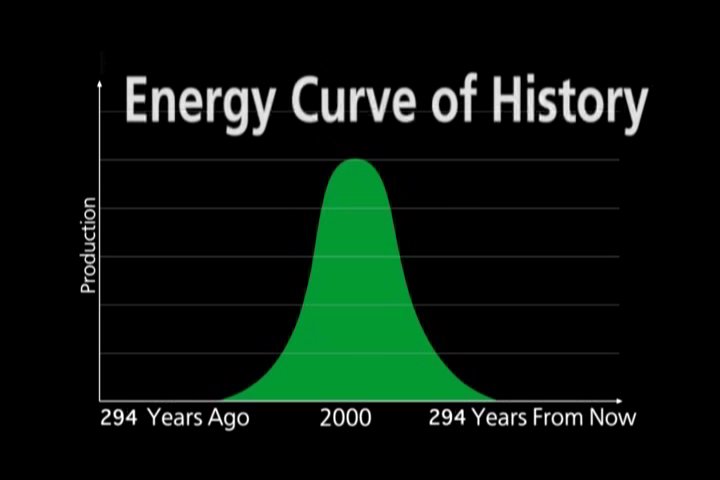
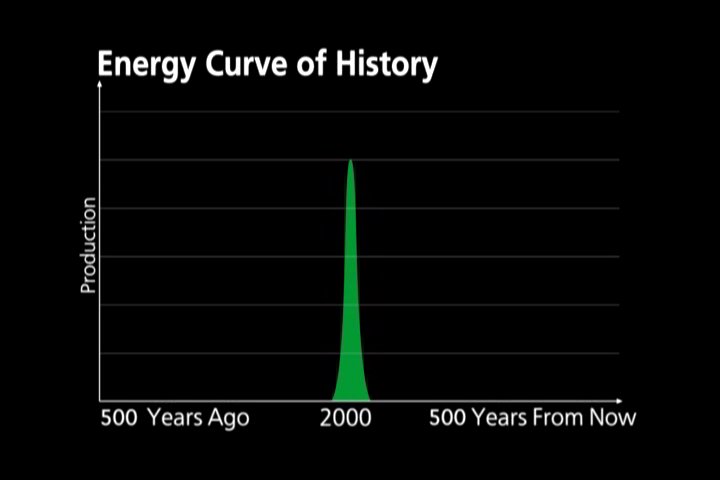
When I saw this representation of human kind's discovery and subsequent consumption of oil it became clear that it is just a blip in our human evolution. The fact that oil has been around since we were born, doesn't affect the reality that in a few short years we will have used it all up.

Make no bones about it - the fight is on, over control of the last scraps, because the society as we know it has come to depend on it. But as consumption exceeds production more and more countries, just as we witnessed in Zimbabwe, will miss out.


The term Peak Oil refers to the likely fact that we have reached the pinnacle of global oil and natural gas output. Production will soon start to decline while demand continues to surge due to an increasing world population and the rapid industrialization of India and China.

How serious is peak oil? James Howard Kunstler in The Long Emergency provides an answer.

For Kunstler, peak oil marks a sharp discontinuity in human experience. The cheap oil and gas of the recent past have created an "artificial bubble of plenitude" that has raised human population far above the earth's base carrying capacity.

When this bubble bursts, the earth's ability to support human life will dramatically decline.

Monday, July 3

politicians and peak oil

Robert,

You really are a creative, energetic and passionate man and I am delighted to know you a little.

Thank you for keeping me in the communications loop, this is really appreciated. I delighted in reading about your number eight wire, creative money saving solutions. You have been and continue to be highly effective in the business of disseminating information.

I understand your frustration at the slowness of response. I am quite clear in my own mind that the solutions will come in both directions. Just as people are building up local solutions and responses, so too are people like you hitting on the politicians and demanding approprate responses to this situation we find ourselves in. Our leaders are presently failing in their task, to focus on the issues and lead this fine country into a better future.

I look forward to the day when the people with a brighter vision for the potential of this country are assuming the mantel of leadership. NZ has the potential to become a shining example of a way forward from the madness of continued economic growth and the corporate driven consumption trap, into a creative, cooperative society of people who understand the deeper values of love, compassion, sharing, and a deep respect for all life.

Be sure to have someone photograph the delivering of these packages, I would suggest at least a photo of you at the beehive post box - or however you are delivering them - with close ups of the list of parliamentarians they are being given to, and a closeup of an open package. It will make a great news story - I will certainly post the pics here, with references and links to oilcrash.com which you have been so doggedly maintaining for how many years now?


On 7/3/06, Robert wrote:

Morning James

This is what I went with in the end, I printed it 3 up with the quotes on the back, then stapeled them to a deposit slip for my bank account, so it is costing me about $50 for DVDs and about 180 sheets of paper + a roll of sellotape . I already had 70 copies of Peters lecture I just scrached the back of it so it only plays for 40 -50 min, that way I am sort of not throwing them out, well I am chucking them in the bin, just via Box 18 888 )

Robert


To all concerned MP’s.

We need at least $30,000, to get 5 DVDs, a 20 page booklet, and a CD with PDF type displays and literature as teacher’s aides, into 800 – 1,000 secondary schools and public libraries.

The DVDs are:
I am including The Power of Community and 45 minutes of Dr Peter Lloyd’s 85 minute lecture with this request, please take the time to watch these DVDs and then consider what is the best thing you can do for our community?

Since the government has over $40 million to spend on Buy NZ made, Environmental issues (PCE), and Energy issues, we trust you will recognise the fantastic return on investment this offer represents. A mere $30,000 for the wide dissemination of a considerable volume of valuable information.

We look forward to hearing from you,

The Oilcrash Group


Robert Atack
www.oilcrash.com


"......But the real issue last week was about bio-diesel and the world running out of fossil fuels. That was the point of the photo op*, and I went there to make that point, it's the world walking the plank frankly, not Don Brash...."

Don Brash, leader of the National Party
7:20am on 15/5/06, Morning Report, National Radio, Radio NZ
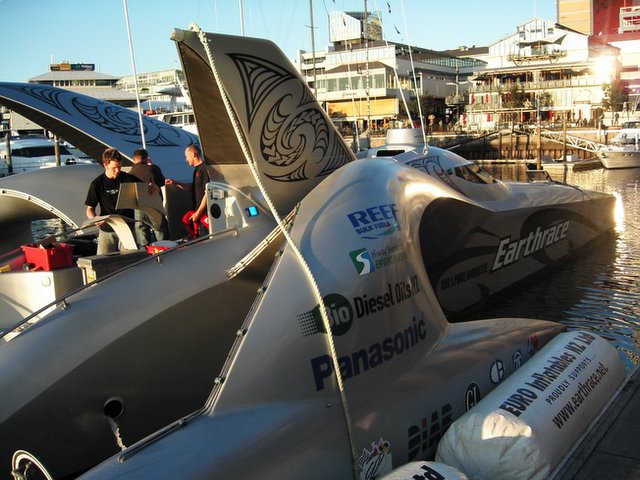
* Referring to his method of transferring off the Earthrace boat


PM - " I'm sure it [the rise in oil prices] is causing concern in every country. Because everyone is on the receiving end of the same phenomenon. Which is oil prices very high, because we're probably not too far short of peak production, if we're not already there. And that concentrates the mind..." [snip]

Helen Clark, New Zealand Prime Minister 18/04/2006
Questioned about govt response to oil price rises.


You’re quite right. Shell Oil International is working on the assumption that between 2005 and 2010 world oil demand will outstrip the capacity of the wells to supply.

Then the price will really go up. So get your bike out!

Jeanette Fitzsimmons, while leader of the Green Party
Email: Thursday, March 23,2000 2:29AM


OIL @ $120 NZ a barrel
"The price is so high now it has to come down"

Alan Bollard Governor Reserve Bank
Monetary Policy Statement June 2006


---


Information is a human right

www.oilcrash.com


Saturday, July 1

bio fuels or food


I don't wish to be a wet blanket on a man's dream - having ridden on this thing last night and met Pete, the man behind the dream, I have huge respect for the energy it has taken to manifest this. But really, do you honestly think, as I suspect many hope, that we are going to maintain the status quo of consumption levels by shifting to bio-fuels.

Our grain reserves are dropping every year, as production outstrips demand, and this is only possible by using huge volumes of fossil fuels (about half of all fossil fuels are being used to grow food). With demand for bio-fuels increasing more people are going to go hungry.

The truth about bio-fuels. This is not a simplistic article - gird your loins.

Come on people, we are going to have to powerdown.

Monday, June 26

the paradigm is the enemy

“Perhaps the greatest flaw in the Peak Oil movement’s current operating paradigm is that, a part of the movement at least, instead of building lifeboats in the face of an immediate disaster, is delusionally focused on trying to build alternative-powered luxury liners that operate just like the paradigm we as a species need to be abandoning.

Not only is this a futile effort, it may well be responsible for killing or destroying the lives of people who at least partially understand Peak Oil and who are trying to find the best courses of immediate action for themselves and their families.”


Michael Ruppert, THE PARADIGM IS THE ENEMY, Speech delivered at the Local Solutions to the Energy Dilemma Conference, April 29, 2006

Friday, June 23

conversation and dialogue


From Transition Culture, yet another poignant article/interview. . .


What are the skills we need to learn and the training & education we need to put in place to respond to peak oil?

We really need to understand the value, and give a value, to loosening up our minds, becoming curious rather then certain, being interested beyond the polarities of the differences, being really interested in how someone else experiences this issue, or any issue. You can educate people into becoming more curious, but it's a serious process. We're certainly not doing in our schools, we're not doing it in our organizations where we just want people to make snap decisions, we want children to give instant simplistic answers…


If you are interested in the subject of effective dialogue, you can read an excerpt and download a full 80 page document here.