Wednesday, April 26

so much happening

It's hard to stay off the computer some days. There seems to be so much happening in the world.

Then again I was never afraid I would miss anything of importance in the days before the internet when I almost never read a newspaper, listened to the radio, or watched television for 15 years. As part of a religious-spiritual community there was always plenty to keep us occupied, and the important things always got through.


But there's a balance, and I am happy to have had the time over the last two years to delve deeply into the workings of the world, through the eyes of those who seem to speak my language, and see things from a larger, more human, caring, and self-transcending vantage point.

--- 0 ---

I did manage to plant some more seeds today. Red Cabbage, Broccoli, and even some White Strawberry. It gives me great pleasure to see the pots bursting with life. We will need to find some gardens to put them in soon.

Tuesday, April 25

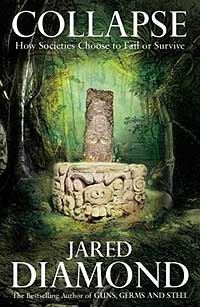
collapse

Collapse was often associated with failing to agree on exercising restraint in harvesting a shared resource.

More info on this important book.

--- 0 ---

I made a bench this morning for my abundant vegetable seedlings, which are growing strong.

Monday, April 24

energy descent plan


The Kinsale Energy Descent Energy Action Plan – an introduction.
by Rob Hopkins, course co-ordinator, Kinsale FEC


Oil
Oil is an amazing material. It can power aeroplanes, run cars and lorries, heat our homes and generate electricity. It can be turned into a huge array of plastics and other polymers the world has never seen before, allowing us access to a great diversity of products our ancestors could only have dreamt of – what Kinsale’s ancient mariners would have given to get their hands on fibreglass and silicon mastic! It can be manufactured into medicines; the vast majority of modern drugs are petrochemical-based. Oil is used to power the production of high embodied energy materials such as cement, aluminium, steel and glass, which we use to house ourselves.

It has facilitated a huge growth in employment and economic wealth, created prosperity previous generations could only have dreamt of. It has allowed us to build an economy where we manufacture less and less and import more and more. We export butter and we import butter. We remove our native orchards and buy apples from the cheapest seller wherever that may be around the world. We have created a façade of wealth while at the same time wantonly discarding the very things that at any other time in history constituted real wealth - well managed diverse woodlands, local, vibrant, diverse food markets, local skills and traditions, local genetic diversity, breeds and varieties uniquely suited to local climate and soils.

However, while oil has brought undeniable benefits, these have come with a price tag. The dangers posed to us all by global warming are known to all at this stage, but suffice to say we have altered the climate in ways that are already causing chaos around the world, and it is only just the beginning.

We live in a world where oil has allowed us to create a huge range of chemical compounds never seen in the world before, many of which have been linked to problems in human health and environmental pollution. It is estimated that we all carry about 400-500 chemicals in our bodies that did not exist sixty years ago. It has also allowed us to create a lifestyle where we live faster - we drive to shop, drive to work, drive to be entertained. We are more stressed and unsatisfied, we sit down to meals with our families less and less, we have less and less time to relax with friends, there is a growing sense that “something is missing”.

The Peak
As Dr. Colin Campbell’s article below sets out, we are reaching a pivotal point in human history. At that moment, global oil production will peak, and from then on, demand will always exceed supply. There will never again be as much oil available as there is now. In short, we will reach (or have already reached) the point at which growth will become impossible. Our economies will need to make the transition to continual contraction rather than relentless growth. There will still be oil in the ground, but its extraction will become unfeasibly expensive and impractical, and our economies, designed on the fundamental assumption that they will always be growing, will have a traumatic period of adjustment to the new reality.

The co-founder of permaculture, David Holmgren, likens our situation to being on the top of a mountain, from where we have views that no-one has ever seen before, but where the storm clouds are gathering. We have to navigate a way down the mountain while we still can, while we still have favourable weather and daylight. If we just allow the peak to happen, without planning for it, we will be in for a very rough ride.

Energy Descent
A planned way down
There is an old saying, “there are three kinds of people; one who watches things happen, one who makes things happen and one who says 'what happened ?'. We do have an alternative to just sitting back and allowing a deeply uncertain future to simply unfold. Our collective dependence on fossil fuels leaves us very vulnerable, and indeed is largely responsible for the instability we see in the world today. To quote Jan Lundberg of the Sustainable Energy Institute, “real peace in a petroleum-fuelled world means rejecting petroleum dependence in all ways possible”.

Sunday, April 23

global public media

I went searching today - for some blogs or sites with solutions and real news that can help serve the transition out of our oil based society. This was the gem I found.


If you go searching within this site you will find many pertinent interviews , both audio and video, which can be downloaded (and shared).

endless oil supplies?

At our Easter gathering last weekend, Danielle told me about a documentary, she had seen on TV, which discussed the 'new' oil reserves in Canada.

I understood that the documentary suggested these new fields along with new extraction technology, was going to help counter the suggested soon-to-be, or maybe already-present, shortfalls in oil production over consumption.

I thought I should do some research, since I had only limited information to offer.

A no-apologies introduction to this subject
For all the people touting tar sands as a solution to the pending apocalypse of Peak Oil, a little experience with reality [could] help them understand that the books on energy are as cooked as the books of Enron, WorldCom and Halliburton. When business tells you there's plenty of oil it is [worth asking whether this might be] to protect the financial markets. Source

From the Sierra Club

"Tar sands oil is to conventional oil what crack cocaine is to ordinary cocaine powder. More harm to global climate through increased greenhouse gas emissions, more destruction of boreal forests, more toxic tailings and more air and water pollution." said Elizabeth May, executive director of Sierra Club of Canada. Source


Alberta's tar sands could hold more than 300 billion recoverable barrels of oil. The term "tar sands" refers to a thick oil called bitumen that is mixed in with sand, clay and water. Unfortunately tar sands oil generates two-and-a-half times as much greenhouse gases of conventional oil production due to the massive amounts of energy needed to extract, upgrade and refine the bitumen.


Originally dug out of open pit mines, there is but companies are now moving away from these huge pits; a new technique allows them to inject steam directly into the soil to melt the tar enough so that it can be pumped back to the surface.

To generate the steam, they burn natural gas, and this is one of the main reasons why Canada has so much trouble meeting its obligations under the Kyoto treaty, and why this source of oil generates between two and three times the greenhouse gases to obtain. Source

Probably the best source of information on the subject of global energy is EnergyBulletin.net. There is a wealth of information available under clear categories on the left hand menu. Start here

There are now a number of agreements that seem to have been reached across many areas of science and industry...
  1. Oil, coal and gas are non-renewable and limited resources.
  2. The burning of these contributes to greenhouse gases, and these are impacting on our environment.
  3. Peak oil is a fact What is harder to pinpoint and therefore where agreement is impossible to achieve, is whether peak oil has occurred already, or if it will happen at some future date.

This last point seems a little irrelevant given the established increasing difficulty and financial and environmental cost of obtaining oil from these 'new' sources. Oil will never be as cheap as it has been in the past. This is beginning to impact on our lives and will do so more with each increase in cost.


Being aware of these changes, it begs the question, how can we reduce our consumption - directly and indirectly - of oil and other non-renewable fuels?

Saturday, April 22

media and public opinion

Does the dominant media reflect public opinion?

Or is it the creator of opinion?


Or perhaps a bit of both?

I'm curious about the growing number of people, many of them prominent, who are calling for the re-opening of the investigation of events leading up to, and following September 11th, 2001. From my reading, there are a lot of unanswered questions, which are neither going away, nor being addressed.

The mass media is largely ignoring this groundswell of opinion, and by doing so, is failing to put its weight behind the call for more transparency on this issue. This could be an indicator of the stance of many/most consumers of that media - for the moment they seem not to want to contemplate the potentially awful truth that their government "might" not actually be serving their [the people's] best interest. It could also be partly an intentional act of creating the point of view the media owners wish to have promoted.

The dominant media which promotes itself as the exclusive holder of the truth, is doing itself significant harm, by failing to be a servant of the people. It's actions will accentuate the growing movement away from them, as people perceive these media as less than reliable
sources of accurate information.

Thankfully there are other ways of finding and disseminating information. They often involve more effort and a more active participation in the process of information gathering. As such they will probably remain the domain of those with more free energy and attention, and those closer to the bread line, or who choose to remain relatively passive, will continue to be swayed by the manufactured truth that spews
endlessly from the TV tubes in every part of our global community.

You have a choice. Read widely, maintain an enquiring mind, notice which media channels are saying what, find out who owns them, be alert, and be willing to doubt the 'official' story of any 'news.'

Here are a couple of recent gems on the 911 issue. These are a tiny snippet from the volume which is out there, but they point to the serious of the people behind them.


Welcome To The World Of Synthetic Terror

From Henry make - April 5th

The following SPINE (Scientific Panel Investigating Nine Eleven) press release was sent yesterday to the editors of over 1,000 American newspapers...

The evidence is in, the analyses have been made, and conclusions have been drawn by scientists, engineers and other experts: the so-called terror attacks of September 11, 2001 were faked. There is, moreover, independent evidence from multiple and credible sources that Al Qaeda is the creation of western intelligence agencies.

If you have any questions concerning these assertions, visit http://www.physics911.net

The Scientific Panel Investigating Nine-Eleven has formed around this website. The Panel consists of over thirty experts in the fields of science, engineering, architecture, intelligence, the military, medicine, Islamic studies and other disciplines. The members are willing to stand up and be counted, even the ones with the highest public profiles. You will find them listed on this page: http://physics911.net/spine.htm.

Full article here


AND

Bush Defector To Demolish 911 Lies On May 6th

The former top economist in Bush's Department of Labor, Morgan Reynolds, will speak out on the 9/11 inside job at the State Historical Society, University of Wisconsin-Madison on Saturday, May 6th. The film Loose Change will be shown, and refreshments served, starting at 1 p.m, and Reynolds will speak at 3:00 p.m.

Dr. Reynolds, who holds three U.W.-Madison degrees, and who is currently Professor of Economics at Texas A&M University, will present evidence that top Bush Administration officials orchestrated the controlled demolition of the World Trade Center, and the murder of almost 2,500 Americans, as a pretext for initiating their pre-planned "long war" in the Middle East.

Full article here

community?


The subject of community is coming up in conversations with ever increasing frequency lately. What is this mysterious thing so may of us are expressing a desire for more of?
  • Is it a sense of belonging?
  • A longing to find people who share our values?
  • A network of mutual sharing and support?
  • A gathering of friends with whom we can celebrate?
  • A reason to dance?

Wednesday, April 19

creative descent

In a conversation last Saturday night, a friend talked about the concept of changing our lives in order to live within our means. Is it me, am I attracting people thinking this way, or is there a owowing awareness of these issues because they are becoming critical to our future well-being and even survival?

This is a concept that is relatively new and I am going to hand over to David Holmgren, co-founder of the Permaculture concepts, to speak to it more eloquently than I could...

While permaculture strategies mesh nicely with many of those directed towards this generally accepted desirable future, permaculture in fact defines a creative response to a fourth scenario that I call “Earth Stewardship” - a “creative descent” in which we progressively reduce our energy demands to return eventually to living within the natural energy and production budget of the land we occupy. Elements of all these scenarios can be found in the wide-ranging viewpoints and arguments of today’s “sustainability” debates.

In the Earth Stewardship “creative descent” scenario, which I consider to represent the only truly sustainable future, human society creatively descends the energy demand slope essentially as a ‘mirror image’ of the creative energy ascent that occurred between the onset of the industrial revolution and the present day. The actual sustainable plateau is a long way down from current energy demands, but also a long way ahead in time. If we begin our journey now, there is time to use our familiarity with continuous change and creative innovation to avoid bringing on “Atlantis”.

So, in an energy-descent future, what are the prospects close to home - here where we live in suburbia? Will it be the end of suburbia? What if we can no longer afford to commute to work by car? What if we are dependent on food and energy supplies that are transported long distances at increasing expense? What if the services and functionality of our communities decline further so that there is ever-diminishing support from local councils and police, for example?

There is a real and viable alternative to this seemingly alarming scenario - a retrofit of suburbia - a remodelling of local neighbourhoods and communities for the energy-descent future. The “refit manual” will bring together and integrate features such as:
  • Home-based work, telecommuting, and cottage industries serving a local clientele;
  • Extended families, lodgers and shared households;
  • Recycling of storm water, waste water, and human waste;
  • Soils of improved fertility, and the water supply and infrastructure for urban agriculture;
  • City farms, cooperative gardening, Farmers’ Markets, and Community Supported Agriculture schemes (CSAs)

Community Supported Agriculture (CSA) is a scheme in which customers undertake to buy a regular box of in-season fruits, vegetables, eggs, etc. from one or more local producers, thus providing the latter with a secure income and the ability to diversify the types of produce they provide.

The bottom line here is that we do not need to wait for policies to change. We can choose today to do this - to create our own small neighbourhoods. ‘Suburban sprawl’ in fact give us an advantage. Detached houses are easy to retrofit, and the space around them allows for solar access and space for food production. A water supply is already in place, our pampered, unproductive ornamental gardens have fertile soils and ready access to nutrients, and we live in ideal areas with mild climates, access to the sea, the city and inland country.

So what do we have to do to make it work? Basically, the answer is “Just do it!” Use whatever space is available and get producing.


Involve the kids - and their friends. Make contact with neighbours and start to barter. Review your material needs and reduce consumption. Share your home - by bringing a family member back or taking in a lodger, for example. Creatively and positively work around regulatory impediments, aiming to help change them in the longer term. Pay off your debts. Work from home. And above all, retrofit your home for your own sustainable future, not for speculative monetary gain.

In an energy-descent world, self-reliance represents real opportunities for early adopters of a permaculture life style:
  • Rises in oil prices will flow through to all natural products (food, timber, etc);
  • Higher commodity prices will be a stimulus for self-reliance and organic farming;
  • Local products will be more competitive than imports;
  • Repair, retrofitting, and recycling will all be more competitive than new replacement;
  • There will be rising demand for permaculture as life-skills eduction; and
  • There will be a resurgence of community life, ethics and values.

There are, however, some real hazards for the greater community in the energy-descent scenario. For example, perverse subsidies and “head-in-the-sand” policies could distort necessary market adjustments (e.g., the end of fuel tax combined with production subsidies to agribusiness). There is a real danger that fascist-style politics could see minorities and those providing for themselves as being to blame for declining social conditions.

Sudden economic and environmental shocks could conceivably lead to social collapse, removing even the security necessary for local food production. We need to understand the energy-descent pathway ahead, act to ensure our own longer-term resource security, and keep ourselves informed about the viewpoints and approaches of the greater national and global communities around us.

Links:

A huge resource with downloadable audio
THE END OF SUBURBIA: Or the Beginning of Widespread Permaculture?
Energy Bulletin - link to full article this is excerpted from
Energy Bulletin - An easily negotiated and thorough site

--- 0 ---

Kim and I hosted an event at the local cinema last night to speak about our trip to Zimbabwe, and to share in an experiential way, the dialogue process of Calling the Circle. Judging by people's expression in the circle, and the gratitude expressed at the end of the night, it was well received. It seems that people are hungry
to
be heard, and to be in a safe place where those things that are most important, relevant and urgent in their thoughts and feelings, can be expressed.

Tuesday, April 18

entitlement

Kim and I were having this conversation about entitlement. Clearly some people seem to feel they are entitled to more than others, and some people do indeed seem to consent to this arrangement and feel entitled to less.

But at the most basic level, it seems to me that to be born on this earth would give us title to, or access to, clean air and clean water, a reasonable supply of a diverse and health giving range of food, and perhaps even the land on which to live and grow this food, harvest and store water, and build a shelter to protect us from the elements?


Am I a dreamer?

Do we live in a world where "dogs eat dogs" as some (usually those with more to protect) propose?

Or is there a way that acknowledges that my needs and yours are of equal importance and - within 'reasonable limits' - we all have a responsibility to monitor our consumption and limit any negative impact (direct or indirect) that we could be having on others?

The following is a teeny clip from a well researched document entitled "Our Future Prospects" by Derek J. Wilson, which you can read here. It speaks eloquently to this topic.

At the start of the Industrial Revolution the ruling powers in Great Britain embarked on one of the most sustained efforts to destroy community life ever undertaken. From 1770 to 1830 some 3,280 enclosure bills were passed putting into private hands for private gain more than six million acres of commonly-held lands, leaving less than 3% of the land under public ownership.

This led to the concentration of wealth in the hands of a small group called the ‘upper classes’. Today, under the control of this ‘special class’, increasing numbers of people are beginning to realise “that the most awesome and ferocious destruction centralised power has inflicted on human life, lies in its destruction of the power and even the identity of localised communities.”

And...

The virtual eclipse of these forms of localised power, and we need to grasp that this is indeed what they were, could not fail to result in the highly centralised forms of political and economic power with which we are familiar today and which we all too often assume are as natural as the stars in their courses. So modern man and woman emerges today, isolated, alienated, manipulated, disorientated, disempowered and debased, at the mercy of giant forces they can neither in many respects comprehend nor control and which are sweeping them towards an inevitable destiny of doom unless some profound changes are made in the management of human affairs. (Small is Powerful, 1995.)

Is it time yet?

Is it time to say "Enough!" ?

Is it time to change our actions and express our understanding of what is reasonable and fair, through non violent acts of civil disobedience?

Is it time to say to those who are clearly having negative impacts - on us and those who follow us, our children and grand children and beyond - stop your wars, your fighting, and your abuse of our environment?

Is it time to call people to "live simply, so that others can simply live"?

Is it time to begin trusting each other, knowing that we are only going to find a way through the challenges of the coming years, by working cooperatively, sharing our talents and skills, our strengths and our creativity?

Or should we wait a little longer?

--- 0 ---

My Purple Chard seedlings popped their heads up overnight. I noticed this as I left for an early morning swim. As I was about to leave the beach I spotted some field mushrooms - they went down a treat with some poached eggs on toast.

Monday, April 17

what if

What if we suddenly decided, to put a value on such human qualities as good sense (as defined by logic that supports rather than destroys life), kindness, the ability to serve and help others, and other such uplifting values? And what if we decided to measure or reward these qualities by way of public recognition, guaranteeing the well-being (through providing of all the needs) of those people who exhibit these qualities?

And at the same time, what if we decided suddenly, to withdraw our faith in those bits of paper and metal, and numbers printed on a bank statement?

What if we sought to engage in those activities for which we are each best suited, (according to physical, mental and emotional strengths and training) and agreed to use our talents for the service of all life on this planet?

--- 0 ---

I have been putting vegetable and herb seeds in pots over the last couple of weeks - a couple of dozen more each few days. It feels good to be doing something practical.