Showing posts with label Climate Change. Show all posts

Thursday, May 3

Europe in Spring heatwave


PARIS, April 26, 2007 (AFP)

Much of western Europe is seeing record temperatures for April which has led to a growing drought threat in many countries. With temperatures in northern France well into the upper 20s Celsius (70s Fahrenheit), the average is more than 10 degrees Celsius (15 degrees Fahrenheit) above normal for April, according to Meteo France, the national weather office. Belgium is having its hottest April since 1830, Germany is having record amounts of sunshine for April and the British Met Office said the first 23 days of the month were the warmest since 1945.

Read more...

Sunday, April 1

Globalists Love Global Warming

This makes for a very interesting read. I am not sure where I stand with this information, but it is a view not often expressed. However I did find the following quote via this article:
Everyone, regardless of your position on global warming or the environment, must take into consideration the solutions that we are being given, as well as the forces behind them which seek to create a global system of domination and control.

Paul Joseph Watson
Prison Planet
Wednesday, March 28, 2007

A common charge leveled against those who question the official orthodoxy of the global warming religion is that they are acting as stooges for the western establishment and big business interests. If this is the case, then why do the high priests of the elite and kingpin oil men continue to fan the flames of global warming hysteria?


The Trilateral Commission, one of the three pillars of the New World Order in alliance with Bilderberg and the CFR, met last week in near secrecy to formulate policy on how best they could exploit global warming fearmongering to ratchet up taxes and control over how westerners live their lives.

At the confab, European Chairman of the Trilateral Commission, Bilderberger and chairman of British Petroleum Peter Sutherland gave a speech in which he issued a "Universal battle cry arose for the world to address “global warming” with a single voice."


Echoing this sentiment was General Lord Guthrie, director of N.M. Rothschild & Sons, member of the House of Lords and former chief of the Defense Staff in London, who urged the Trilateral power-brokers to "Address the global climate crisis with a single voice, and impose rules that apply worldwide."


Allegations that skeptics of the man-made explanation behind global warming are somehow doing the bidding of the elite are laughable in the face of the fact that Rothschild operatives and the very chairman of British Petroleum are the ones orchestrating an elitist plan to push global warming fears in order to achieve political objectives.


We have a similar situation to the Peak Oil scam, which was created by the oil industry as a profit boon to promote artificial scarcity, and yet is parroted by environmentalists who grandstand as if they are in opposition to the oil companies.


In his excellent article, Global warming hysteria serves as excuse for world government, Daniel Taylor outlines how the exploitation of the natural phenomenon of "global warming" was a pet project of the Club of Rome and the CFR.
"In a report titled "The First Global Revolution" (1991) published by the Club of Rome, a globalist think tank, we find the following statement: "In searching for a new enemy to unite us, we came up with the idea that pollution, the threat of global warming, water shortages, famine and the like would fit the bill.... All these dangers are caused by human intervention... The real enemy, then, is humanity itself."

"Richard Haass, the current president of the Council on Foreign Relations, stated in his article "State sovereignty must be altered in globalized era," that a system of world government must be created and sovereignty eliminated in order to fight global warming, as well as terrorism. "Moreover, states must be prepared to cede some sovereignty to world bodies if the international system is to function," says Haass. "Globalization thus implies that sovereignty is not only becoming weaker in reality, but that it needs to become weaker. States would be wise to weaken sovereignty in order to protect themselves..."

Full article is here.

Something to think about.

Friday, January 19

the video compilation

Here is the 34 minute video compilation that Derek and I put together with the help of a dear friend and video editor.


It is a collection of short clips from six current documentary films describing some of the challenges that face us as a species. They are organised under the headings of Peak Oil, Economic Collapse, Climate Change and Responses to these. Here is a list of the films and a description of the specific short clips which are included in this 34 minute compilation:

The Power of Community - A succinct history of Peak Oil and how Cuba came to their own Peak Oil moment with the collapse of the Soviet Union in the late 1980's. It shows a little glimpse of the grass roots response to the need to feed their population, when their oil-dependent agriculture was no longer able to do so.

Oil Smoke and Mirrors - Richard Heinburg, author of The Party's Over: Oil, War and the Fate of Industrial Societies, and the book Powerdown: Options and Action for a Post-Carbon World, expresses how easy it is, even for him, to fall into a level of denial about the significant changes that are almost certainly headed our way. A few other highly reputable politicians, business people and a geologist speak about dependence on Oil, the potential for global economic upheaval, and an explanation of why the media is largely quiet on these subjects.

David Attenborough's BBC documentary, Can We Save Planet Earth - CO2 is made visible in a clever graphic display and explanation of its sources and effects. We hear about China's direction and their part in the growing total of CO2 that is being released into our atmosphere.

Denial Stops Here - Michael Ruppert offers his insights into the global economic environment and makes some startling suggestions about the implications of the current situation.

An Inconvenient Truth - It is hard to go past Al Gore's big CO2 and Global temperature chart for the last 650,000 years, without asking what might be in store for us.

The End of Suburbia - despite this being the oldest film in the line-up, with footage taken from the Paris meeting of ASPO (Association for the Study of Peak Oil) in 2002, it's contribution is valuable. This puts recent world events into perspective, and helps explain some of the lead up to them.

We hope this compilation (in all its amateur and jerky wonder) captures the essence of key issues which are already facing us as we race towards a global population of 7 billion persons. A key message is that each of us needs to learn how to reduce our footprint on this earth, and find ways, through cooperation and mutual support to meet our needs without disadvantaging future generations.

There is nothing refined about this production, but it is our humble effort to share information with you. Now if you know of anyone who wants to throw some money at this project, and have it made into a cleaner presentation, we are more than happy to help. But this was the result of some concerned citizens who squeezed in a few late nights in their busy schedule to put this together with limited technology.

Monday, December 4

David Korten video

You may have read the posts on his book: From Empire to Earth Community. Here's a short preview clip from his slide show . . .


The full slide show can be purchased from Peak Moments.

Sunday, December 3

tipping point: energy

Written by Jan Lundberg
PDF of the entire article

Culture Change Letter #145,
November 27-29, 2006


What we can do about passing the energy tipping point?


The energy tipping point has been reached, just as a system such as the climate has been found to have a critical threshold that some scientists believe has probably been reached. Obviously, climate disaster is much more ominous than the enormous consequences of passing the energy tipping point.

As if it's a matter of choice, there are those who don't want to see any concerns about energy supply distract us from the climate challenge. Yet, the two crises are related and inseparable. There happens to be a common approach to mitigate each of them.
Meanwhile, the mainstream corporate press is finally hinting at limitations on the economy from the "constraints" of both climate and energy. This is heresy for free marketeers who believe in endless growth. The New York Times ran a guest editorial column on Nov. 29 that said,
The world’s supply of cheap energy is tightening, and humankind’s enormous output of greenhouse gases is disrupting the earth’s climate. Together, these two constraints could eventually hobble global economic growth and cap the size of the global economy. The most important resource to consider in this situation is energy, because it is our economy’s “master resource” -- the one ingredient essential for every economic activity. (Thomas Homer-Dixon's op-ed, "The End of Ingenuity")

This article continues and for the sake of brevity I have cut it here, but it is by far one of the most eloquent summary statements of our situation and I highly recommend clicking here and reading on...

Saturday, November 18

first time in living memory

I just came back inside after stepping out to feel the wind that has been howling for most of the night. It is gusting over 60Km/hr, as measured by my handheld wind meter. While it is not as strong as the 120Km/hr winds of nine days ago, which shut down the Telecom Tower in the city, it is still far more than I recall.

The words, "So you don't believe in climate change?" popped into my head. I have a feeling that these more extreme weather conditions are not about to become less common anytime soon.

It prompted me to search a little of the weather records and I stumbled across this article that just came in:

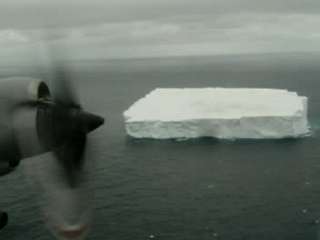
Nov 17th, 2006: An iceberg has been spotted from the New Zealand shore for the first time in living memory. Courier Mail


Scientists are trying to determine where it and several other giant chunks drifting in the country's waters originated from.
Last year, icebergs were seen in New Zealand water for the first time in 56 years, but couldn't be seen from the shore. On Thursday one was visible from Dunedin on the South Island. It has since moved away, driven by winds and ocean currents.

The floating ice blocks have become a tourist attraction, as sightseers pay up to $NZ500 ($435) each to fly over the icebergs.
Theories about where on the Antarctic coastline the icebergs originated have gripped the science community.

Sunday, November 5

icebergs

This was reported last year - Jan 06, 2005
Icebergs in New Zealand waters for first time in 57 years
New Zealanders complaining about unseasonal summer rain in recent weeks have received proof of changing climatic conditions after icebergs were sighted in local waters for the first time since 1948. The icebergs were see in the Southern Ocean, about 700 kilometres southeast of the South Island, the National Institute of Water and Atmospheric Research (NIWA) said Thursday.

Now - Nov 04, 2006
100 Icebergs Float 260km Off Invergargill


About 100 icebergs, in two groups, have been found south of New Zealand with the first group no more than 261km south of Invercargill. The size of the largest iceberg was about 2km by 1.5km and over 130m high.

A Royal New Zealand Air Force (RNZAF) P3-K Orion aircraft on a routine fisheries patrol in the southern ocean spotted the huge sheets of ice. Orion captain Squadron Leader Andy Nielsen said it was not unusual to see icebergs in the southern ocean. "We were surprised by the number of them and by how far north they were," he said.

Friday, October 6

crisis in the amazon

Taken directly from Earth Future's web site - September 2006.

CRISIS IN THE AMAZON

I wish you didn’t have to read such news in a small newsletter like this, when it should be hammered across the front pages of the world’s newspapers. I wish I didn’t have to write it at all.

The Amazon rainforest, home to a fifth of the planet’s plant and animal species, 200 indigenous cultures, and 30 million people, is in danger of dying.

Once, there was a river

The Amazon is in the second year of its worst drought on record. Rivers and lakes have turned to sand and mud, and millions of fish have died. Brazil’s government has declared a state of emergency across all 253 towns in the region that depend on boats for food, medicines, and fuel.

The drought is being linked to record water temperatures in the south-west Atlantic and the Gulf of Mexico, and the constant destructive logging.

But here’s the alarming bit. Starting in 2002, Dr Dan Nepstead from the world-class Woods Hole Research Centre did an experiment in which he covered 2.5 acres of the rainforest with plastic sheets to see how it would cope when deprived of rain, and surrounded the area with sophisticated sensors.

In the first year, the trees managed okay. In the second year, they dug their roots deeper in search of water. In the third year they started dying. The tallest trees crashed to the ground, exposing the forest floor to the sun. By the end of the third year, they had released 2/3rds of the carbon dioxide they had been storing, adding it to the atmosphere’s burden. The Amazon stores 90 billion tonnes of carbon, enough to increase global warming by 50%.

If the drought continues next year, Dr Nepstead expects mega-fires to sweep across the forest. "With the trees gone, the soil will bake in the sun and the rainforest could become a desert."

If the Amazon were to die, the impact would affect the entire planet, since the hot, wet Amazon evaporates vast amounts of water that rises high into the sky, drawing in the wet north-east trade winds which pick up moisture from the Atlantic. Without the forest to absorb the water and store the carbon, much of the world would become hotter and dryer. (Thanks to Geoffrey Lean, The Independent, July 23, 2006)

Once, there was a river

The speed of deforestation is a big factor behind the drought. About a fifth of the Amazon rainforest has been razed completely, but another 22% has been logged enough to allow sun to penetrate the forest floor and dry it out. That brings the total to 42%, close to 50%, which the climate models predict to be the tipping point for the death of the Amazon.

The Amazon in happier days

Saturday, September 16

disappearing ice


The melting of the sea ice in the Arctic, the clearest sign so far of global warming, has taken a sudden and enormous leap forward, in one of the most ominous developments yet in the onset of climate change.

Two separate studies by Nasa, using different satellite monitoring technologies, both show a great surge in the disappearance of Arctic ice cover in the last two years.
One, from the Jet Propulsion Laboratory in California, shows that Arctic perennial sea ice, which normally survives the summer melt season and remains year-round, shrank by 14 per cent in just 12 months between 2004 and 2005.

The overall decrease in the ice cover was 720,000 sq km (280,000 sq miles) - an area almost the size of Turkey, gone in a single year. The other study, from the Goddard Space Flight Centre, in Maryland, shows that the perennial ice melting rate, which has averaged 0.15 per cent a year since satellite observations began in 1979, has suddenly accelerated hugely.

In the past two winters the rate has increased to six per cent a year - that is, it has got more than 30 times faster.
The changes are alarming scientists and environmentalists, because they far exceed the rate at which supercomputer models of climate change predict the Arctic ice will melt under the influence of global warming - which is rapid enough.

If climate change is not checked, the Arctic ice will all be gone by 2070, and people will be able to sail to the North Pole. But if these new rates of melting are maintained, the Arctic ice will all be gone decades before that.


The implications are colossal. It will mean extinction in the wild - in the lifetime of children alive today - for one of the world's most majestic creatures, the polar bear, which needs the ice to hunt seals.


It means the possibility of a lethal "feedback" mechanism speeding up global warming, because the dark surface of the open Arctic ocean will absorb the sun's heat, rather than reflect it as the ice cover does now - and so the world will get even hotter.

But most of all, the new developments add to the growing concern that climate change as a process is starting to happen much faster than scientists considered it would, even five years ago when the UN's Intergovernmental Panel on Climate Change published its last report.


"These are the latest in a long series of recent studies, all telling us that climate change is faster and nastier than we thought," said Tom Burke, a former government green adviser and now a visiting professor at Imperial College London.

"An abyss is opening up between the speed at which the climate is changing and the speed at which governments are responding...


..."I think we have a very brief window of opportunity to deal with climate change ... no longer than a decade, at the most," he said.

Source article

Michael McCarthy and David Usborne

15 September 2006

The Independent

Friday, September 1

remember Katrina?

Here's a new clip from youtube which gives the other story of the disaster that you didnt see on TV.


Prediction: Lebanon will be rebuilt before New Orleans is.

Instead of providing help to the tens of thousands of poor people who were stranded in the city after the federal levees collapsed, the government spread propaganda:

"There's rioting... there's looting... the city is too dangerous to bring supplies to..."

The truth: At the Convention Center, 19,000 people were searched for weapons. A total of thirteen were found. At the Super Dome, 39,000 were searched for weapons. Fifty were found.

No video because I couldn't find any that does this story justice. But there is an audio program

Amazing story: No one can find the federally funded evacuation plan. It was paid for, but apparently never produced. People who had real expertise were ignored. The company that was hired to prepare the plan: major contributors to the Republican Party.

Thanks to Brasscheck TV for this information.


Monday, July 31

denial runs deep

Half-Hour Hurricanes
St. Louis's July 19th Ultra Storm
By DON FITZ


As clips of hurricane-strength winds uprooting trees across St. Louis in late July made national news, many commentators spoke of the awesome power of nature. But this storm was not an act of god. It was an act of Exxon-Mobile and its friends. And they are not gods, even if they are treated as such by the White House.


Where were the warnings?


...The storm didn't seem real until it was over, maybe 30 minutes later. Needing to know if my organic garden needs water, I carefully watch the weather reports. But I couldn't remember any storm warnings. At home with no electricity, I look through the paper for the forecast for that day: "Humidity will be very high and the excessive heat warning remains in effect." Nothing about the possibility of a storm, not even a mention of rain or wind in the forecast.


Talking to Roger Hill, a meteorological consultant for Weathering Heights in Worcester, Vermont, I said that, during my 30 plus years in St. Louis, I had never seen such extreme weather with no warning at all. He jumped in, "If you are wondering if it's part of global warming, the answer is yes."


He explained that storms are a balancing of energy between the rising of low-lying, humid warm air and the sinking of colder air. Extra warmth makes the balancing more extreme. The ongoing warming of the earth causes stronger upward and downward motions of air masses, which results in more violent wind and rain. Hill, who does weather forecasting for five radio stations, expects that global warming will result in more erratic fluctuations between the extremes of drought and excessive storms.

...Everyone agreed that it was the most damaging storm system ever to hit St. Louis. And there was zero warning 12 hours before the first blast arrived. The second most destructive storm in St. Louis history saw 217,000 people without power. That was in August, 2005.


Though the two worst storms in St. Louis history happened within the last 11 months, the phrase "global warming" did not appear in corporate media. I did not hear it on the radio or see it in dozens of newspaper stories or TV broadcasts.
The single explanation of the storm was that it was a "gust front" resulting from a combination of hot, moist air from south of St. Louis and cool air pooled in north central Illinois. No media analysis probed why it was so intense, unpredicted, and the second in two years. Media stories were limited to human suffering and relief efforts.

The ultra-storm

Let's go over some of the storm-related events in St. Louis, but not as something in the past which is over and done with. Instead, visualize them in the present, as what is likely to happen in cities during the more intense and more frequent events caused by global warming that could be called "ultra-storms."
  • The day the ultra-storm hits, there is no warning on radio, TV or newspaper that would help people prepare for it.
  • Suddenly, winds increase to 60 ­ 90 miles per hour, knocking down trees and blowing off roofs.
  • Between 55% and 90% of homes lose electrical power.
  • Broken power lines in yards and streets ignite fires and electrocute residents and repair workers.
  • Entire business districts become ghost towns, with block after block of locked doors during the day and no lighting at night.
  • Temperatures of over 100 degrees with sweltering humidity push people without power to seek relief at cooling centers or at the homes of relatives or friends.
  • Cops, emergency workers, and a token 300 National Guardspeople go door-to-door looking for anyone stranded in the heat.
  • Another storm (or 2 or 3) during the next few days starts everything up again.
  • As days go by, people throw rotting food out of their refrigerators.
  • Power outages make gasoline and ice premium items.
  • Clean-up crews make streets passable but water main breaks flood other roads.
  • People in low income areas watch the rich get their power restored first.
  • Those who cannot be at home to give access to power company workers discover that their homes do not get repaired and they prepare for weeks without electricity.
  • People get a "boil order" for drinking water and then the gas gets shut off due to line breakage. (Maybe use candles to boil water?)
  • Reporters show roads blocked by trees, power lines broken by trees, cars crushed by trees, and roofs smashed by trees, leading viewers to see the tree as public enemy number one and the chain saw as god's greatest gift to man.
  • Reporters never utter the phrase "global warming," as if station editors want to be sure that viewers see the crisis as a natural disaster and never connect the dots to New Orleans.

Sunday, June 25

CO2 - We call it life

The Competitive Enterprise Institute has produced two 60-second television spots focusing on the alleged global warming crisis and the calls by some environmental groups and politicians for reduced energy use.


The Competitive Enterprise Institute is a non-profit public policy organization dedicated to advancing the principles of free enterprise and limited government. We believe that individuals are best helped not by government intervention, but by making their own choices in a free marketplace. Since its founding in 1984, CEI has grown into a $3,000,000 institution with a team of over 20 policy experts and other staff.

We are nationally recognized as a leading voice on a broad range of regulatory issues-from free market approaches to environmental policy, to antitrust and technology policy, to risk regulation...

Follow the money.

Wednesday, June 21

climate change is out

Investors Seek Climate Change Information

By The New York Times
Thursday, June 15, 2006

Investors worried about the possible financial fallout from greenhouse gas emissions have asked the Securities and Exchange Commission to require that companies disclose their financial vulnerability to changes in climate.

Yesterday, a group of 27 investors who collectively manage more than $1 trillion in assets sent a letter to the S.E.C. chairman, Christopher Cox, asking that financial risks linked to climate change issues be included as part of routine corporate financial reports.

The letter, whose signers included several state officials, including the New York Comptroller Alan G. Hevesi, defines risk broadly.

"Investors have a right to know if a company's buildings are in the path of hurricanes that might be exacerbated by climate change, or if it will face high costs when greenhouse gas emissions are regulated," said James Coburn, a policy adviser at Ceres, a coalition of investors and environmental groups that sent the letter. "They need that information to reduce their portfolio risk."

Just as important, Mr. Coburn said, companies that are forced to quantify and disclose their vulnerabilities are far more likely to address them. "What is measured is managed," he said.

Mr. Coburn said Ceres faxed the letter to Mr. Cox, and sent e-mail copies to several staff members. It has also mailed copies to the chairman and commissioners.

A spokesman for the S.E.C., John Heine, said the agency had no comment at this time.

Monday, June 5

global warming a big hit


The big production film on Global Warming, An Inconvenient Truth, is racing up the charts!

If you compare other films and how many theatres each film is screening in, this is quite remarkable. In only its second week of release, and playing in only a miserable 77 theatres, it has managed to climb to 9th position - based on last week's gross box office takings! Let's see how many cinemas try and grab for this one next week!

Update 23 June: It's at 12 place and now in 404 cinemas.

I'm betting the Waiheke Community Cinema will be getting this one as soon as it becomes available.

Friday, May 26

an inconvenient truth

There's a new film out - a major motion picture by all accounts on a subject that dares to address global warming. It states very clearly that Global Warming is man made and that we can have some impact on it. Al Gore is putting his weight behind this issue, with a sense of humour thrown in for good measure. Happy to see he didn't just roll over after the debacle called a democratic election.


Tuesday, May 16

bottom up

I have been proposing for some time that the solutions are going to have to come from the bottom and filter up - demanding governments change things for us is an assumption of weakness and gives our power away. Kim and I witnessed this in Africa, and the signs are that the "leaders" of our great nations are for the most part, in an unseemly hurry to aquire as much wealth and power as they can to secure their own sorry backsides against the future challenges.

This morning while browsing some of the blogs I visit regularly, I came across this.

Global Public Sees Global Warming Threat

A new poll of adults in 30 countries finds that 65 percent think global warming is a very serious problem, while 25 percent call it somewhat serious. Clearly global citizenry is more in touch with climate science and ecological change than their leaders. It is unconscionable that world governments are failing to lead.

Not only should the U.S. be condemned (though they and Australia are the worst offenders); but the response from Canada, Europe, Japan, China and India has also been tepid and irresponsible.

The possibility of a bottom up climate revolution should not be discarded given this significant level of concern - particularly as the crisis continues to turn deadly. Now it remains to be seen what those expressing concern
would be willing to forgo to address the climate crisis.

Monday, May 1

global warming

HOW TO BE AN ENVIRONMENTALIST: GOTTA GIT A GREEN THUMB

If you don't have one already, there's no better time than the present to start your own vegetable garden, whether it's on your own land or in a local community plot.

According to the latest data from the US Department of Agriculture, the level of home food production is at its lowest point in US history. With the average food traveling more than 1500 miles from farm to fork, the environmental impact of big agribusiness foods is at an all time high.
  • To back this up, John Jeavons suggests that in the US only one person in 500 is a farmer producing food. What are the consequences of this? When so few people know how to grow food, and then only doing so supported by the phenomenal usage of fossil fuels?

Concerned about global warming and peak oil? Consider the fact that it takes 400 calories of fossil fuels to transport a single 5 calorie strawberry from California to East Coast supermarkets. What's more, that flavorless non-organic strawberry was grown with methyl bromide, a carcinogenic and ozone depleting pesticide.

In contrast, a perennial patch of strawberries in your yard grows back on its own every year, requires no fossil fuels and no pesticides, and tastes a whole lot better. The environmental benefits of growing some of your own food are staggering. The Organic Consumers Association is developing a new campaign to help turn every thumb into a Green thumb.

Saturday, April 1

climate change or human change

"An answer is always the part of the road that is behind you.
Only questions point to the future."
- Jostein Gaarder

How we love to have someone tell us how the future is going to unfold, and Lord Oxburgh's lecture at the University last night was no different. The advertised subject matter - climate change - filled the house, and people sat in the aisles and on any spare piece of floor near the podium.


But what a burden it must be to be a scientist in today's society - to be expected to know the answers to the hard questions.

His presentation started off on a note I could relate to. The fact that we have been born into a world of cheap fuel has led us down a dead end road. Having created an infrastructure which depends on oil at every turn, we are moving at a dangerously slow pace to embrace the necessary changes from an oil economy to . . . well this was the sticky point.


There was lots of talk of bio fuels and how (apart from a small experimental plant in Canada producing a new form of ethanol) most of the bio fuel potential is abysmally un-hopeful, since after you take away the fuel used to grow and process the stuff, there's bugger-all left over.


There was talk of changing the infrastructure - cars, planes, power plants, and so on to make them more efficient, and cleaner running. He even suggested how many decades it would take for each of these, but the fact is that there is little happening in this area so far, and he was very clear on this much - that time is running out.


Then the statistics came thick and fast. A particularly shocking one referred to coal reserves and who has them, and who is likely to use them. And what will be the impact on the CO2 levels when countries like China start to burn the stuff willy nilly (without developing the - still theoretical - carbon trap systems in the power plants). Yikes!


Seriously, the man knows a lot and good on him for standing up and saying what he does, but it was all a bit too polite for my taste.
No, this was not someone willing to take society's denial-bull by the horn, and say it like it is. Don't panic the people, whatever you do. And keep them thinking that the corporations and the politicians are going to fix it for us if we just write them a letter every month asking them to tweak the system a little bit, by making nice labelling systems to tell us which washing machine is most energy efficient.

I think Mr Oxburgh is probably still on the Shell Corporation's payroll, and certainly his past involvement allowed him to reveal various technological
inventions that they (we?) hope will be fixes for our problems. As for asking or demanding the politicians fix things, who do you imagine decides which politicians are going to be in power, but the corporations who fund the parties that will bring forth the legislation to benefit them. And the very fact of asking/demanding gives our power away and reinforces the assumption that we are weak and they are strong. This is not the society I want to live in.

Sorry but it wasn't what I was looking for. My only regret is that I didn't get up at the end and take the microphone and tell everyone what they probably quietly suspect, but are hoping is not true - that it is going to require each and every one of us to make a change of lifestyle that will involve reducing our consumption dramatically and our CO2 footprint with it. And that is a big conversation because it penetrates the very core of who we think we are.


I believe there is a place of deep stillness where we sense our life is a passing play, full of mystery and magic, and where we came from and where we go will only be known when we get there. For now we are here and we need not fear for our survival, our continuance, or our end. All is well. Only from this place can we release our obsessive compulsive consumption.


Here's the CO2 graph that shows us going off the chart a few short years ago. We were told that the critical CO2 PPM (Parts per million) is 550.

** For a lengthy, and very readable and worthwhile article on denial - Gaia and Psychology click here...

Sunday, February 26

Zimbabwe today

Reading these just-in news reports about Zimbabwe, while packing my bag, brought up the fear, not just for my life, but fear that if confronted by the realities, I would either feel too much, or shut down and not feel at all.

I'll try to post something now and then on this blog.

The caption that went with this picture:
As Zimbabwe's drought has worsened, the goal of providing 'supplementary' food for children has lost its meaning. This school lunch is the the first, and only, meal these children will have all day.

Killer Drought Threatens East Africa
In cracked riverbeds once flowing with water, dozens of hippos lie decomposing in the stifling heat. The thin, delicate frames of rare Grevy's zebras lie on parched grass, felled by anthrax. The wildlife in East Africa is dying of thirst and starvation, the people are suffering - and now the lack of rain threatens even the Serengeti migrations.


Zimbabwe's shortages, inflation blamed for rise in illegal abortions
HARARE, Zimbabwe (AP) -- The corpses of at least 20 newborn babies and fetuses are found each week in the sewers of Zimbabwe's capital, some having been flushed down toilets, Harare city authorities said, according to state media Friday.

Zimbabwean Women Protesters Held

About 200 women are in police custody in the Zimbabwe capital, Harare, after a protest on Tuesday over food prices and human rights violations.

Sunday, February 19

denial

A long article, but it could be helpful . . .

Gaia and Psychology

John Mead


There seem to be a vast number of questions and possibilities about the relationship of Gaia to psychology. On which should we concentrate?


For example:- Is there such a thing as Gaian morality? Whence are our values? Is the human psyche wholly the product of earthly forces? What should we make of the words of Sir Thomas Browne: "There is surely a piece of divinity in us, something that was before the elements, and owes no homage unto the sun"; or of the words of the Church of England collect for Tuesday in Easter week, which speaks of God's grace "putting into our minds good desires", which certainly sounds like a psychological process. Is that process in fact performed by Gaia? Or if we are the consciousness of Gaia, as Lovelock suggests, are we also the conscience?


Then there are questions about our power to avert climate catastrophe. According to Lovelock, we can save ourselves, but only with the help of nuclear energy. But, he says, it is ludicrous to think that we can save the world – by the end of the century the earth's temperature will have risen by 8C. But in that case, in what sense can we save ourselves, since the Exeter conference of climate scientists last February concluded that a 2C increase is the utmost compatible with climate stability?


In order to make the discussion rather more manageable, I suggest that we leave to one side for the moment the recent predictions of Lovelock, and go by those of the IPCC and of the Exeter conference last February. They are the conclusions of the overwhelming majority of climate scientists. The latter are not at present predicting inevitable disaster, though they certainly say we have very little time in which to avert it – at the utmost ten years.


If we ask, what is the importance for Gaia of the topic of psychology?, is it simply of academic importance?, we must surely reply:- for the moment the future of the planet rests in the hands of the collective human psyche. To what extent should we also assume that our interests, rightly understood, are identical with those of Gaia?


We may then ask: What, in terms of psychology, is the current global situation?


When we consider the scale of the threat to the global climate, and therefore to human life, the imminence of the threat, and the almost total failure to take action that might avert it, it is surely obvious that our entire culture, indeed our entire civilization, and with it our collective psyche and state of motivation, is in a most extraordinary mess. As Jung put it, the whole psyche is in a state of uproar. At times it seems to me that this mess to some extent invades our own discussions here in the Gaia network. The future of human civilization, and even of the species, now hangs upon the individual and collective psyche.


That invites us to take seriously another set of questions. Are neurosis and psychosis partially, perhaps largely, the product of disturbances in our relationship with the planet, or perhaps in the planet itself? If so, would that not justify and indeed require in psychotherapy from time to time the kind of interpretation reported by Terrance O'Connor, who interrupted a client's obsessive, self-absorbed soliloquy by asking "Are you aware that the planet is dying?" If the Gaia thesis is correct, would it not be surprising if the current global situation, however repressed in the unconscious, had no effect on the human psyche?


This might be the moment at which, if we had time, we might discuss the whole concept of anima mundi. Lack of time, the urgency of the crisis we have neglected for so long, pervades the whole situation. As Jonathon Porritt says in his recent book on the destructive effects of capitalism on the environment, we just don't have time to work out a more satisfactory political and economic system. We have somehow to make now, at once, the necessary reductions in CO2 emissions.


For it appears that global catastrophe can be averted only if we in the rich countries very rapidly take action to reduce CO2 emissions, reductions so radical that they will require the end of affluence and its replacement by a way of life far more modest.


We have therefore to ask: What motivation is needed to avert this catastrophe, and why is it not available? That question takes us to the heart of the collective mess. Even to describe the mess is quite difficult. But let me try.


What I am attempting is a survey of the main psychological features of the UK scene.


If the climate scientists are right, we are as a civilization confronted by a very terrifying prospect. In this company I need hardly spell out the details. Sir David King has said that if we carry on as we are, by the end of the century Antarctica is likely to be the only habitable continent. Lovelock thinks it is already too late to avert disaster. The IPCC predicts that by 2050 there will 150M environmental refugees. The Exeter conference last February gave us at most ten years in which to make the very radical reductions in CO2 emissions needed if catastrophe is to be averted. As George Monbiot has said: "We are not facing the end of holidays in Seville because Seville has become too hot. We are facing the end of human existence."


We have to take account of spiritual as well as political and psychological outcomes. The World Council of Churches warns that the number of victims of climate change and the scale of the disasters affecting them may exceed the human capacity for solidarity, and that "love may grow cold". Dr. Rowan Williams speaks of "the horror of a world of spiraling inequality" and warns that "When we speak about environmental crisis, we are not to think only of spiraling poverty and mortality, but about brutal and uncontainable conflict", a remark echoed by Lovelock, who speaks of a future of "a broken rabble led by brutal war lords". Dr.Rowan Williams fears that "We may as a species cease to be capable of some vision of universal justice".


Lovelock himself seems even to be inviting us to abandon such a vision – and to be advocating in its place a policy of sauve qui peut. He speaks of seeking to preserve civilisation – but is not civilisation at its best based on such a vision?


That is the prospect. It invites us to ask two questions:-


(a) How does one live with all this? – this is a very real psychological problem.

How are people responding to this prospect?: and


(b) Why is that response so inadequate, so unequal to the task before it?


So first, how does one live with all this? It is indeed a terrifying prospect. Yet the vast majority of people are not in a state of terror, or even of anxiety.


First, there are those who somehow manage to find the strength to recognize pretty fully the main dimensions of our global situation. They are a tiny minority. That recognition can be psychologically and emotionally pretty demanding and costly. I know personally some of the leading members of this group. They experience daily feelings of horror, grief, rage, depression, despair. In general, the fuller and more expert their knowledge, the deeper their pessimism.


I am myself frequently possessed by such feelings. Often I have said to myself: "John, you must find something more cheerful to think about". And I have sought peace of mind both in the insights of depth psychology, more of which later, and in the teachings of Christianity. Thus I have turned to a passage such as the following from St. John of the Cross:


Keep your heart in peace; let nothing in this world disturb it: all things have an end.

In all circumstances, however hard they may be, we should rejoice rather than be cast down, that we may not lose the greatest good, the peace and tranquility of our soul.


If the whole world and all that is within it were thrown into confusion, disquietude on that account would be vanity, because that disquietude would do more harm than good. To endure all things with an equable and peaceful mind, not only brings with it many blessings to the soul, but also enables us, in the midst of our difficulties, to have a clear judgment about them, and to minister the fitting remedy for them.


I discussed this passage, not long before his death, with the late Hugh Montefiore. I said I simply did not know how to implement its advice. He replied that he doubted that one should even try to do so – that the most one could say was: "Underneath are the everlasting arms".


As for depth psychology, that might traditionally seek to interpret one's anxiety by tracing it to some intra-psychic conflict or trauma. As a psychotherapist myself, I certainly cannot rule that out. But it seems not to do justice to the objective realities.


That is the first group. Several of its members describe what they call a "road to Damascus" experience, which led them to recognize the frightening realities of the global predicament.


The second group is far larger, and less clearly defined, but it needs neither religion nor psychotherapy to protect it from rage, depression and despair, for it already has something more effective than either – denial. This denial can be individual or collective. As long as we are in denial about climate change we are free from the very painful feelings listed above. But we are also free from any motivation to take action to avert it.


Hence the answer to my second question: Why is the response so inadequate, so unequal to the task before it? must be: the prevalence of denial make an adequate response impossible.


It follows that denial, individual and collective, is by far the biggest obstacle to be overcome if there is to be any hope of averting climate catastrophe.


Denial about climate change remains widespread in the UK public. But this is but one manifestation of a much wider and more fundamental denial, one that has been described by a variety of writers, notably the distinguished Christian economist Herman Daly in Beyond Growth. Writing of the concept of sustainable development, he refers to the shift it requires in our vision of how the economic activities of human beings are related to the natural world, one which involves replacing the economic norm of quantitative expansion (growth) with that of qualitative improvement. In his own words:


"This shift is resisted by most economic and political institutions. Enormous forces of denial are aligned against it, and to overcome them requires a deep philosophical clarification, even religious renewal". (My emphasis).


The most superficial reading of the finance pages of the media confirms Daly's words. They all take utterly for granted the vital need of growth for a healthy economy. The necessity of growth is the first article of faith in our economic credo. And the trouble about climate change is that it constitutes, if taken seriously, a most formidable challenge to that credo. As the World Council of Churches have recently said: "Measures to reduce greenhouse gas emissions run against the dynamic of the present project of society based in ever-expanding production and consumption. A vision of society is at stake".


Hence the need for denial to protect that vision. But what is meant by denial in this context? Obviously it is not just conscious deliberate dishonesty. The academic economists do not begin each day with the conscious resolve to tell lies to their students. Nor is it just ignorance, though ignorance certainly abounds. It refers rather to the honest rejection at a conscious level of some truth or fact which at a deeper level is known about however incompletely, but which is avoided because of the fear and anxiety which it arouses. Denial is much more intractable than ignorance. The latter can be corrected by more information. But for denial, information is water off a duck's back. All the water is immediately shed, apart from a few drops. These indeed sparkle for a moment in the sun. Then the duck gives its feathers a brisk little shake, and the status quo is restored. Denial is a "defense mechanism". It defends the individual from some truth which he cannot afford to acknowledge because to do so would expose him to overwhelming feelings of horror or shame or confusion. It therefore defends that basic clarity and peace of mind which we all need if we are to carry on with our lives, and to which we all therefore tend to cling. To remove it plunges us at once into a desperate struggle to redefine our identity and somehow to bring a new order into what has become for the time being frightening chaos in our understanding of ourselves and of the world. In some shape or form, denial tends to some degree to be a permanent feature of human life. Thus it is axiomatic in psychotherapy that "we all need our defenses". As T .S. Eliot says "Humankind cannot bear very much reality". Hence the enormous resistance to attempts to remove denial.


Collective denial is to a much higher degree the product of social forces, and to understand it takes us into the realm of social psychology – particularly conformity and cognitive dissonance. Society needs to guard and preserve as does the individual certain fundamental assumptions if the peace of mind of its members is to be maintained. In our current culture these include those basic economic assumptions referred to by Daly in the passage quoted above. We are socialised almost from birth to take those assumptions utterly for granted. The forces of conformity to group norms are central to this process. They act to maintain the massive states of denial to which Daly refers. We are thus defended against any threat to what may be called our cognitive vested interests.


We need to look at our own emotional involvement in this vast and frightening process, and in the conscious and unconscious forces at work. For the alternative to denial is to be conscious, conscious of what is at stake - nothing less than the future of the planet as a place able to support human life in sufficiency and peace, and conscious also of our feelings about the situation – for it is quite possible, and quite common, for people to be in denial about their own feelings. One common way of doing this is to say: "Well, disaster is inevitable, there's nothing anyone can do about it, so we might as well have a good time – for our holiday let's fly to Turkey or India." Despair thus becomes a sedative rather than a spur.


But to contemplate fully, without denial, the extent of all that is now at risk, the magnitude of the vested interests to be overcome, and the brevity of the time still available to put things right, is almost certainly to encounter anxiety, and even at times depression and despair. There must be for all of us the unconscious temptation to avoid that emotional pain by re-entering to some extent the refuge of denial, perhaps by apathy, perhaps by excited "manic" activity in some other direction, perhaps by the fatalism, which releases us from action by declaring that disaster is inevitable, so there's no point in doing anything.


As the WCC says:


"The threat of climate change is of such magnitude that it surpasses the human capacity to react. People tend therefore to protect themselves by pursuing their present way of life"


And a leading eco-psychologist, Joanna Macy, has written: "The perils facing life on earth are so massive and unprecedented that they are hard to believe. The very danger signals that should rivet our attention summon up the blood and bond us in collective action, tend to have the opposite effect. They make us want to pull down the blinds and busy ourselves with other things".


Discussion ensued to which these notes are added:

If that is the prospect we face, and that is the response to it, one of denial and apathy, effectively blocking the actions needed to avert catastrophe, two points need to be stressed.


First, that it is only in response to massive public pressure that the politicians will take the necessary measures in time to avert climate catastrophe;

Secondly, that the chief obstacle to be overcome in the generation of that pressure is the psychological state of denial with regard to climate change which currently informs UK public opinion.


So what are the remedies? Are there any?


I believe there are. But they all stem from one major remedy, without which most of the others cannot be implemented. The key to it lies in those words of Joanna Macey. "The very danger signals that should rivet our attention summon up the blood and bond us in collective action, tend to have the opposite effect. They make us want to pull down the blinds and busy ourselves with other things".


That is the tendency that at present undermines all our efforts. It is that that we must combat. We must, that is to say, deliberately set out to join forces, to meet together, in small groups, and discuss both our understanding of the situation, and our feelings about it, and how we are to achieve collective action. That means sharing those feelings – of despair, impotence, anger, depression, etc. In this matter it is fatal, spiritually and psychologically, to be isolated. Dr. Rowan Williams described this well when he spoke, in his Environment Lecture, of the need to overcome denial by promoting "new and secure relationships enabling us to confront unwelcome truths without the fear of being destroyed by them".


Like many of my contemporaries, I recall the Munich Agreement of September 1938, and the years leading up to the second world war, a time of denial in some ways similar to our own. T.S. Eliot wrote of his horrified reaction to that event, that what he felt was "not a criticism of government but a doubt of the validity of a civilisation".


No such doubt assails Lovelock about the validity our current civilisation. On the contrary, he believes we should seek above all to preserve it, here in the UK, and without concern for the rest of the world. Furthermore, he says, "You can't have civilization now without electricity."


And of course, if he is right, you can't have electricity without nuclear energy. Just where that leaves Africa, South America, much of SE Asia, etc., in terms of "civilization", let alone Iran and much of the Middle East, Lovelock does not explore. For him, the one thing really worth preserving in today's terrible global predicament is the civilization that has led us into it. This idea, surely, is another example of the dreadful mess affecting our collective psyche and moral consciousness.


On 8th January, 2000, the Tablet published an extraordinarily prescient article, "Beware Apocalypse", about climate change, by the late Adrian Hastings. He, like Lovelock, predicted disaster. He called on his readers "to recognize that global catastrophe is in the judgment of hard realism very likely to come upon us". But his advice was very different from Lovelock's. We should, he said, "prepare ourselves and small communities of sanity and faith to live undespairingly within it. Even inside a concentration camp or on the deck of the Titanic there is a Gospel to preach and a pattern of behaviour reflective of that Gospel. There is little time to lose in preparing ourselves mentally for Christian life in the very hardest of times".


Obviously, whether one is a Christian or not, the demands on our collective psyche in terms of sanity and faith are now formidable. I set out – last September – to describe in this paper the current psychological landscape of the UK. Now, four months later, it is evident how rapidly, and at times dramatically, that landscape is changing, in ways that at times encourage one to hope that denial of the threat of climate catastrophe is at last beginning to evaporate. Such hopes have of course surfaced from time to time in the recent past, only for denial to be reestablished as before. But one such hopeful sign is the remarkable readiness of an increasing number of people publicly to reject air travel for holidays.


As I write, Clare Short is presenting to the UN Commission for Social Development the argument for a civilization based upon equity and upon respect for the earth's ecological limits. If adopted, that would mean a commitment to the policy of Contraction and Convergence (of the Global Commons Institute), and to a radical reduction in the affluence of the rich countries. And in the USA, Al Gore is apparently having extraordinary success in his efforts to persuade Americans to take seriously the threat of climate catastrophe, an issue which even the evangelical right is beginning to discuss.


All these issues need somehow to be integrated and made coherent within the collective psyche of the UK, and of the rich world in general.


We are certainly perilously near a "tipping point" in terms of climate change. It seems possible that we are also near a "tipping point" in terms of public awareness and readiness to act. What is now needed – and with great urgency – is the establishment of that capacity for collective action of which Joanna Macey speaks, and which at present is rendered impotent by the psychologically divisive effects of denial. We need to use that collective action to put massive pressure on politicians to take those measures which can yet save our civilization and the future of human life.


John Mead.

February 9, 2006