Showing posts with label Localisation. Show all posts

Thursday, June 28

taking care of business

From Harvey Jones:

The article below was in our local newspaper last night. Eketahuna is a small town of only about 1,000 or less people, nearby my home town of Pahiatua (pop 3,000).

There has been a running down in New Zealand of various local services.
At Eketahuna the local community are taking things into their own hands. A few years ago the petrol station burned down and none of the oil companies wanted to be part of any rebuilding.

The town created a community trust which all local members were invited to contribute to. From this, they funded the building of a new service station. Now there is no need to travel 25 kms to fill the tank.

A hardware store was similar funded.
There is no doctor in the town so they organised a community nursing service to provide a front line service and reduce travel needs. Now a banking service as well.

I noted that there is no history of
their previous accomplishments in the article below. Now we have to find ways to grow the movement and share the expertise.

____________________
Original source URL:

http://stuff.co.nz/manawatustandard/4108644a6502.html
Tuesday, 26 June 2007

Do-it-yourself banking arrives


The small Tararua town of Eketahuna is taking Do It Yourself to whole
new levels.

It didn't have a supermarket, so it created its own. It didn't have a
petrol station, so it set one up.

Now, the town is taking banking into its own hands as well.


After all the major banks refused to put either a branch or automatic
teller machine in Eketahuna, locals decided to set up a money exchange. The exchange was the brainchild of Tararua district councillor Claire Matthews, a banking studies senior lecturer. She said Eketahuna's population of about 500 made it too small for a bank. "It's purely a question of profit. It would not be economically viable." An exchange was the obvious solution, after seeing similar systems in other small towns. "A bank branch is only of use if you are with that bank, and an ATM really only allows withdrawals, which may attract higher fees for customers of other banks. I suggested a money exchange, as I had seen in Northland." Mrs Matthews said not having banking services was frustrating for people in Eketahuna, where the nearest bank facilities were 25km away in Pahiatua.

The exchange will be run by staff in the council's service centre and
will aim to break even rather than make a profit, with the council subsidising the operation for the first six months on a trial basis. It will provide access to cash through an eftpos machine, change for businesses, cash or cheque deposits, and cheque cashing for approved customers. Deposits will go by courier to banks in Masterton. It is expected to be up and running by August.

Thursday, June 14

Willits Economic LocaLisation

Kelpie Wilson Interviews Jason Bradford

Jason Bradford is a PhD evolutionary biologist who studied the effects of climate change on cloud forests in the Andes under the auspices of the Missouri Botanical Garden and other institutions. But in 2004 he switched his focus from study to action by initiating a remarkable community organizing effort in his new home town of Willits, California, called Willits Economic LocaLization (WELL).

Kelpie Wilson: Jason, in a nutshell, what is the mission of WELL?

Jason Bradford: The official WELL mission is to foster the creation of a local, sustainable economy in the Willits area by partnering with other organizations to watch for opportunities and vulnerabilities, incubate and coordinate projects, and facilitate dialogue, action and education within our community.

The greatest challenge we, as a species, face right now is to create a way of life based on the energy flow of sunlight, not fossil or nuclear energy, to do so without destroying our soils, and to enroll others in this transition. We are under no illusion that Willits can tackle this alone, but hope that Willits can be an inspiration to others. If we can do it here, it is possible elsewhere.

Kelpie Wilson: How did you make the decision to switch from a career in climate change and biodiversity research to this hands-on engagement with sustainable living?

Jason Bradford: I became really frustrated and disillusioned as a researcher. I would sit in my office and read the flood of data about the climate system, habitat loss and extinction, soil and fresh water depletion, and the impending peak of global oil production. Then I would listen to the radio or look at the newspaper and these issues were basically ignored, meaning my work was being ignored...

Kelpie Wilson: In his Labor Day speech, President Bush addressed our "oil addiction" and said that the problem is that "dependence on foreign oil jeopardizes our capacity to grow." In your view, is the energy crisis mostly about our dependence on foreign oil from "people who don't like us," as the president said? Or is there a deeper problem?

Jason Bradford: It is extremely important right now to give people heartfelt honesty. The lies of Bush and Cheney make them bigger threats than those swarthy people they like to scare us with. Cheney said the American way of life is non-negotiable. In a bizarre sense that is true. The laws of physics and ecology won't negotiate and can't be unilaterally ignored. And those laws are telling us we need to change how we inhabit this planet very quickly or we may not be around that much longer.

I have an idea. Let's stop blaming others for our problems. The deeper issue is our addiction to growth. Oil has permitted astounding economic growth, and we have become dependent, both structurally and psychologically, upon not just the oil but the growth process itself. Instead of questioning our assumptions, we are going to war for oil and we are looking for substitutes that are very dirty, like coal, tar sands, and nuclear. And while I am in complete favor of developing renewable energy systems as quickly as possible, I don't believe it is either possible or wise to grow our economy using renewable energy.

The problems with growth are easy to understand, but the implications are hard to face. For example, I have two children, twin boys who are seven years old. For now and over the next dozen years or so I'll be happy if they grow. During certain phases of development growth is perfectly good. But our economy is now beyond any reasonable limits, and we are making ourselves sick with more growth - as a society we have obesity and cancer, and the vital organs are starting to fail. Suburban sprawl, highway expansion, military build-up, air pollution, climate change, and mass extinction of species - these all stem from our drive to grow the economy.

Ironically, there exists a counter movement to slow down in life. Enjoy quality rather than quantity. Many are finding that the pleasures of a beautiful home, neighborhood and community are rewarding enough. Spend time building relationships where you are instead of traveling afar and spending money on things. Less is more. Now that is truly economical.

Full article...

Monday, March 26

changing climate, changing minds

I was so impressed by this, that I have posted it here in its totallity.
This is not my work. Please visit Richard Neville's site for more...


--------

Journal of a Futurist

By Richard Neville - Mar 7, 2007


Cans Seurat, 2007 - Digital C print, 72x110"
Depicts 106,000 aluminum cans
the number used in the US every thirty seconds.


16 reasons to be cheerful

1. The public has long been ahead of politicians in recognising the danger of toxic emissions and will remain the driving force in rescuing the future. Everyone on Earth can play a role, irrespective of age, income or clout. Such a challenge can be strangely empowering, like the Blitz Spirit. (The wrecking of nature is more of a threat than the Luftwaffe). The outcome will redefine what it means to be human.

2. Shopping will cease to enthral. Buy Nothing Day has evolved to Buy Nothing Month. Recovering shopaholics are exchanging pledges to abstain. Some families refuse to buy anything new until something old is given away. But every so often a bright idea will win hearts, such as this 100% biodegradable, solar powered, I-Pod charging, naturally dyed hemp handbag.

3. No longer master of the universe, the “economy” will be its servant. Today's hi-flyers in Ferraris will get mud on their Armani's, as they plant acres of fruit trees and turn weeds into diesel. A new economics promotes the “good life without money stress, overwork and joyless consumption.” The bean counters will lose their status, unless the beans are certified organic and fairly traded. You will be able to discuss communes, creativity and consciousness with you bank manager.

THINKERS, DREAMERS, INVENTORS
Partial Zoom of the cans, Chris Jordan


4. To think and act both locally and globally will become second nature. Already there is a push for a Global Marshall Plan to restore the environment and to close the poverty gap. In the face of an array of threats, people are asking what can we do for our planet … and for our own community (growers markets are more fun than supermarkets). Today's passive spectators are tomorrow's activists.

5. Failing to own a house with a water view is no longer a matter of regret.


6. The urgency of global repair will unleash a boom of innovation and imagination that will dwarf the Renaissance. Tomorrow is about connecting, collaborating, creating. Solutions depend less on finding a Leonardo or an Einstein than on motivating millions of thinkers, dreamers, inventors.


7. Wind surfers will achieve terrifying speeds.


Actual size

8. The quest for carbon neutrality will transform the built environment. Architects have abolished the need for air conditioning by copying the airflows of termitaries. How did train manufacturers in Japan put an end to the sonic booms caused by engines when entering tunnels? By imitating the design of a Kingfisher's beak. Bio-mimicry is more profitable than bio-rape.

9. New kinds of leaders will emerge. The left/right dichotomy will be transcended by a global mind shift, incorporating intellectual fluidity, empathy, adaptability, foresight. Farewell to actor-politicians mouthing platitudes while secretly colluding with lobbyists. (And Farewell to so-called “intellectuals” who write about global warming but never have time to sort their own garbage - Mrs Neville. RNRubbish!).


THE FIRST EARTH BATTALION

Prison Uniforms, 2007
Archival inkjet, 11x23 feet in six vertical panels


10. The boom in renewable energy will ease the West's addiction to oil and its need to pillage the Middle East. When the human and environmental cost of war is fully revealed, there will be widespread revulsion. Politicians who promote invasions will be run out of town. Tanks will be turned into ploughshares and the only valid mission of tomorrow's military will be to repair the ecosystem.

11. Guantanamo Bay, Abu Ghraib , Bagram, etc, will be re-tooled as renewable energy factories, the labour provided by former war criminals.

12. Fast food will slow down. Vegetarianism will globalise. Obesity will decline.


13. In the race against Global Warming, youth will be the key participants, driven by the knowledge that the future lies in their hands and the joy of Making a Difference. The age of apathy is over.


Actual Size

14. Mass media will play a role in bringing climate change issues home to huge audiences. Instead of entertaining us all to death, they can save species from the brink of extinction. Old warlords are changing their tune. Rupert Murdoch's media empire has long equated environmentalists with reds under the beds, but its editors have been ordered to back flip. News Corp has switched from a state of denial to a state of confusion, which is progress. Murdoch's sons are carbon neutral and the patriarch is learning yoga.

15. Involvement with a cause greater than oneself eliminates depression.

16. Countless uplifting initiatives are happening beyond the orbit of Governments. The change of climate is changing the workplace. Corporate foresight is stretching beyond quarterly reports and limited electoral cycles. People are taking into their workplace what they're discussing at home, such is mapping out a new role for business. Even in toxic industries like cement and waste management, there is a determination to be emissions free. No more greenwashing. Despondency is giving way to resilience, daring and a shared sense of purpose. Blitz Spirit 2.

Finally, a goal for humanity beyond getting rich quick by despoiling our environment - both physical and mental - and calling it income.

Plastic Bags, 2007 - Digital C print, 72x86"
Depicts 60,000 plastic bags, the number used in the US every five seconds.
www.chrisjordan.com


Send comments and suggestions to: futurist@richardneville.com.au

Saturday, January 20

2,000 tomatoes

Did I tell you that this year is my year for focusing on food? Specifically local food production in all its wonderful and diverse forms.

I see us using the great breadth and depth of wisdom and knowledge we have, so we can begin to enjoy an abundance of healthy and vibrant, locally grown food fit to nourish our souls. I see a generosity of spirit as one after another land owner or land care-taker, offers access to the earth for the purposes of growing food. I see us building the soil - a sure sign of a civilisation that believes there is a future and respects the life giving earth which will nourish future generations. I see a community of healthy happy people with full stomachs, and not one person left out. I see men, women and children coming together to engage each other in conversation about real things and I see us feeling good about ourselves, as we contribute to the good of the whole.

After watching the wonderful film about Peter Proctor's work in India, I thought a little research was in order. I entered "Biodynamics" in google video and the one which caught my eye was a one
minute piece that shows a tomato plant, the like of which I have never seen. I was curious what he put in that hole, so I went to [www.rotheraine.com] the link given in the description and found this 10 minute presentation that describes some of the key components of a recipe that has given others the same result.


Imagine.

Friday, January 19

the video compilation

Here is the 34 minute video compilation that Derek and I put together with the help of a dear friend and video editor.


It is a collection of short clips from six current documentary films describing some of the challenges that face us as a species. They are organised under the headings of Peak Oil, Economic Collapse, Climate Change and Responses to these. Here is a list of the films and a description of the specific short clips which are included in this 34 minute compilation:

The Power of Community - A succinct history of Peak Oil and how Cuba came to their own Peak Oil moment with the collapse of the Soviet Union in the late 1980's. It shows a little glimpse of the grass roots response to the need to feed their population, when their oil-dependent agriculture was no longer able to do so.

Oil Smoke and Mirrors - Richard Heinburg, author of The Party's Over: Oil, War and the Fate of Industrial Societies, and the book Powerdown: Options and Action for a Post-Carbon World, expresses how easy it is, even for him, to fall into a level of denial about the significant changes that are almost certainly headed our way. A few other highly reputable politicians, business people and a geologist speak about dependence on Oil, the potential for global economic upheaval, and an explanation of why the media is largely quiet on these subjects.

David Attenborough's BBC documentary, Can We Save Planet Earth - CO2 is made visible in a clever graphic display and explanation of its sources and effects. We hear about China's direction and their part in the growing total of CO2 that is being released into our atmosphere.

Denial Stops Here - Michael Ruppert offers his insights into the global economic environment and makes some startling suggestions about the implications of the current situation.

An Inconvenient Truth - It is hard to go past Al Gore's big CO2 and Global temperature chart for the last 650,000 years, without asking what might be in store for us.

The End of Suburbia - despite this being the oldest film in the line-up, with footage taken from the Paris meeting of ASPO (Association for the Study of Peak Oil) in 2002, it's contribution is valuable. This puts recent world events into perspective, and helps explain some of the lead up to them.

We hope this compilation (in all its amateur and jerky wonder) captures the essence of key issues which are already facing us as we race towards a global population of 7 billion persons. A key message is that each of us needs to learn how to reduce our footprint on this earth, and find ways, through cooperation and mutual support to meet our needs without disadvantaging future generations.

There is nothing refined about this production, but it is our humble effort to share information with you. Now if you know of anyone who wants to throw some money at this project, and have it made into a cleaner presentation, we are more than happy to help. But this was the result of some concerned citizens who squeezed in a few late nights in their busy schedule to put this together with limited technology.

Monday, December 25

working together

My friend Ted from Nelson, pointed me to this video. It is on youtube and I first watched it on the Transistion Culture blog.

It is a great example of the benefits of avoiding a them-and-us approach, as peak oil activist and local authority representative (both from Portland) sit side by side on a sofa and talk about preparing for peak oil. Exemplary stuff.


Friday, December 15

imagine Waiheke


I have been adding a few posts recently, to a site called "Imagine Waiheke."

Please do drop in there sometime, have a squizz, and
leave a comment if you feel moved.

Friday, June 30

local initiatives

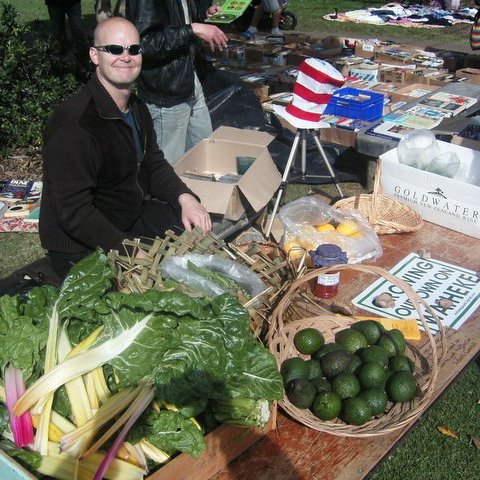
Thanks to everyone for continued support to the community garden and the food exchange stall.

Roberta and Millicent attended the
food exchange stall last weekend and had a stead flow of produce being exchanged as well as a healthy volume of interest in the concept of sharing in our abundance. This week Robin is back on the stall, which will continue to be setup inside the hall for these winter months - though it will be nice to be back outside when the warmer weather returns.


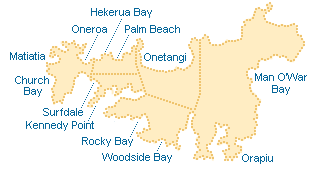
Several keen volunteers who have been moving a large stack of donated bricks from a house in Kennedy Point to the community garden over the last couple of weeks.

Why bricks?

Initially we thought it would be fun to create some bordered areas - such as a spiral herb garden. Then I got in contact with Grant Steven, who refers to himself as a biological gardener working with intensive gardening systems on a large scale in the Bay of Islands. Grant has developed a system for raised bed gardens which is proving very effective, and has offered to use his moulds and help us to set up some raised beds in the community garden - which is where the bricks can be helpful.

You can meet Grant at the Waiheke Community Cinema on July 4th (7:30pm) when we are screening The End of Suburbia, a film that is a very clear introduction to Peak Oil. Grant is actively involved in helping to communicate about Peak Oil (he is well versed on this subject) and helping people to see that we need to be localising - growing our food much closer to home. The years of the 3,000 mile Ceaser Salad are coming to an end.


It feels good to use this garden as an example of different growing methods, and having some intensive raised bed gardens here, next to the market, will be an opportunity for more people to learn different methods of intensive food growing on any small piece of sunny ground they may have access to.


Dave from
Waiheke Couriers, who owns the land we are growing on, continues to be incredibly supportive of our work in the garden and is happy for us to develop these raised intensive beds, and such like. On behalf of all of us, many thanks to you Dave, your generosity does not go unnoticed.

Monday, June 19

politics or self help

A friend wrote last night expressing his, understandable frustration about the slowness of the political leaders to respond to the facts of Peak Oil,and their failure to begin paving the way for new means of providing for the necessities of life. It grew out of a conversation around some documentary films on Cuba (The Power of Community, and The Greening of Cuba), who had their Peak Oil moment back in 1989.

The films tell how the average Cuban lost several pounds of body fat before their food growing efforts yielded fruit, but they came through and met the challenge in creative and innovative ways. They moved away from fossil fuel dependent agriculture and turned to permaculture and organics. There is much we can learn from them. One of these films is being screened at the Waiheke Community CInema on July 18th.

This is my letter in response to my friend's outpouring of frustration:

The Greens, Labour, ACT, National, and any others that may come along are part of an old system that I have been saying for some time is broken and is not supposed to be fixed. It is based on old models of working which don't (work) anymore. They assume a top down management model that wont work.

I dont waste my energy supporting or fighting them, but prefer to channel it into creating the bottom up foundational systems which will grow and thrive as the old systems collapse. As people wake up and see the extent to which they have been lied to by their leaders, they tend to express anger first, but then they look for other ways to function, operate, interact, live and get their needs met.

I dont believe that pointing fingers at Bush, or Cheney, Clark or any other 'leader' does anything more than postpone the inevitable moment when we wake up and realise that we are the responsible party. Looking to someone in a 'leadership' position and demanding they fix things is a form of giving away power. Me weak, you strong, you big powerful person fix this problem for poor powerless me.

The entire system that is consuming the final supplies of oil is being encouraged by those people, yes to be sure. But it is we the people who are filling our tanks, buying the produce which has travelled around the globe to get to our table, after being fertilised and pesticided and packaged to get there. As we wake up and do things differently we buy out of that system and withdraw our suppport for it.

Now it could move faster if 'leaders' got on board and helped educate the masses, who are asleep, because they continue to be fed world cup football and told that everything is fine - just keep consuming. But then those people would remain in the same position of being manipulated by whatever the latest message is. And this moment seems to be about awakening from the slumber and becoming self-aware and aware of our inter-dependent place in the totality of humanity.

My reading of the situation is that there will be a significant die-off of the human population. We have found a food/energy source that has enabled us to explode our population - it has doubled in my lifetime. Now that food/energy source has peaked and we are on the downward slide, and with it will surely come a reduction in the population that depends on it.

Some realise this, and are stepping back from dependence on oil as an energy/food source, and I would rather put my time into supporting and working with those people, than struggle to wake up those who are fast asleep.

Good news about the thermette - thanks for the prompt, I will put this on my preparedness list.

Gently,

James
--
www.yesterdaysfuture.net


Friday, June 16

circuses, fire and love


It began for me when I received a phone call from Daring Donna a few weeks ago, inviting me to co-create an event for 45 people who were coming over to Waiheke for some team building. This was followed by a couple more phone conversations, then the "serious" fun meeting 10 days before the event was to happen, at a cafe in Auckland. That was when the six of us agreed on the basic format of helping them to create a circus, which they would then perform at a free-to-public event. As we sat around the table, I imagined helping support this team by bringing a web based project software (Basecamp) into the mix, and showing how it could be used by everyone involved.


As the days passed, through the weekend and the days leading up to the event, I began to see the project growing and taking form. You can browse through this and a range of other projects by clicking here and logging in with the name: ccguest, and password: ccguest. When you get in, check out the various tabs at the top of the page. The event was huge success, due to a lot of different factors.

I was particularly delighted, in seeing how this collaboration tool was supporting the project that itself was occurring in an environment of a high level of trust, clearly evident between the co-creators. I choose to see this as an example of how we can operate when we have turned from Empire to Earth Community. From the assumption that the world is a place of competition, domination, top down management and scarcity, to the world as a place of conscious individuals, acknowledging inter-dependence, love, caring, celebration of life.

As the urgency of our situation (dependence on a finite oil supply) becomes more apparent, a wide range of responses will manifest, from denial, to panic, self-protection, anger, and for some - acceptance. Those who accept the situation can then begin the process of building the new society.


I spoke with a friend, in Nelson, who has been studying Peak Oil for almost a decade now and who understands very well the implications of it. As we talked I sensed his deep and understandable frustration that people don't get it - that denial is still so prevalent. How to move things forward? A section from Michael Ruppert's film "Denial Stops Here" came to mind, in which he expresses that in his earlier career as a policeman he had been in situations where he had to choose who was going to live and who was going to die. Some people will remain in denial and that is just the way it is. We need to work with those who have accepted the situation. These people are ready to make changes and herein lies the opportunity.

Imagine regional networks of people all making creative local changes, then feeding ideas for what is working in their area into a "Things that work place" from where they can draw more good ideas from other regions. Like starting a campfire on a cold winters night, beginning with the small pieces of dry grass, and slowly adding a few twigs as the flames start to take hold. It's important to give people small projects to begin with, and not to smother the fire by loading up too much material until it takes hold.

Here on Waiheke we have had a food exchange stall at the Saturday market. It is a simple concept, easy to embrace, where people bring the excess produce (fruits, vegetables, preserves) from their gardens and share it with others. Sometime people make donations if they wish, but money is not a pre-requisite for receiving from the abundance. The stall is also supported by the community garden, which people put effort into and from which we draw excess. This is one simple idea, which can be initiated in any community, and it can become a focal point for conversation.


There are other initiatives which I can describe - but my point is the process by which these ideas can be shared across regions. If you would like to share ideas that have worked in your region add a comment to this post, with your email, and I can send you an invitation to participate in a Basecamp project where we can share these ideas across the country and beyond.

Each of these new expressions of a healthy, caring society can, like the sticks and finally the logs on the fire, generate the heat which consumes our denial and warms us with vision for a brighter future.

Thursday, June 8

rabbit mountain

I was thrilled to see this initiative! It speaks volumes to me, of the potential of human societies to meet our needs in a mutually supportive and creatives ways, that minimise our impact on this fragile planet'’s resources.

The Rabbit Mountain Relocalization Map is an experiment designed to support relocalization efforts by mapping local, sustainable business and organizations in Europe and North America (other regions are still under development). It is used by adding markers for farmerÂ’s markets, CSAs, organic farms, community banks, and other sustainable local businesses in your area, no matter where you live.

If you want to see a couple of examples from Waiheke Island (NZ), go to the locations tab, choose the "“collapse all" option, then drill down under New Zealand. Once you click on the organisation you want it will centre itself on the map. Once there you can move the slider to zoom in and change from Satelite to Map to let you view the streets. Simply click and drag on the map itself to move it around for a better view.

I originally stumbled across this concept on Paula'’s Blog.

By all accounts it was not a huge job to put this together. Paula has done most of the work herself, and there was minimal cost involved. It'’s a great use of technology. It could be helpful in finding our needs closer to home - something we'’ll be doing more of in the coming years.

---0---

Helen Dew (Living Economies NZ), sent me this news today.

The info stall at the Green Party AGM was very successful. I sold quite a few books and gave out lots of info. I was delighted to hear Russell Norman say in his speech that the party needs to promote green economics!

This was also echoed by the leader of the Young Greens. The level of interest in our books and message was significantly higher this year than it had been at 2004 AGM, when very few attended our power-point presentation or showed interest in our wares. This year lots of people stopped to talk and I returned home with 2 1/2 pages of contacts to follow up.

More evidence of The Great Turning!

Helen


Monday, May 22

who grows your food?

Joel believes that the only meaningful guarantee of integrity is when buyers and sellers can look one another in the eye...

”
Joel, who describes himself as a “Christian-libertarian-environmentalist-lunatic farmer,” speaks of his farming as his “ministry,” and certainly his 1,000 or so regular customers hear plenty of preaching. Each spring he sends out a long, feisty, single-spaced letter that could convince even a fast-food junkie that buying a pastured broiler from Polyface Farm qualifies as an act of social, environmental, nutritional, and political redemption.

“Greetings from the non-bar code people,” began one recent missive, before launching into a high-flying jeremiad against our disconnected “multi-national global corporate techno-glitzy food system” with its “industrial fecal factory concentration camp farms.” (The dangerous pileup of modifiers is a hallmark of Joel’s rhetorical style.)

Like any good jeremiad, this one eventually transits from despair to hope, noting that the “yearning in the human soul to smell a flower, pet a pig and enjoy food with a face is stronger now than anytime in history,” before moving into a matter-of-fact discussion of this year’s prices and the paramount importance of sending in your order blanks and showing up to collect your chickens on time. For the whole story

Saturday, May 20

localisation

I listened to the full 45 minute audio of this one night while camping on the beach during my kayak journey around Waiheke. This is near the end of the interview, which covers a lot of climate change and peak oil issues from a well-researched scientist who has turned his energy to localisation projects in Willits California. Which also happens to be the home of John Jeavons of bio growintensive.

Global Public Media:
Tell me your vision for Willits 2020.

Jason Bradford: Yes, 2020 vision for Willits. These are my hopes and dreams. I'm going to start with food. We have about forty community-supported farms out in the valley. These farms employ so many people, they're working at these farms and they're good jobs, dependable jobs, I mean everyone needs food. Job security is there. They are also the sort of jobs that put people in touch with the rhythms of nature, the natural cycles. They're interesting jobs because we're not growing mono-crop agriculture. We've got all the grains, we're growing rye and wheat and barley and oats and winter beans and all the different vegetables you can imagine. And so learning about this, getting in touch with these wonderful creatures, raising chickens, I mean the animals are just so interesting.

That I think is the basis. And imagine how interesting it is for kids to be raised in an environment where they see where their food comes from, you have harvest festivals. The kids may be out at school during the time when there's planting or harvesting and the community comes to gather around that.

And then you have the local manufacturing that supports all this. So again the young people, maybe the middle age folks who have lost their jobs if the manufacturing base has been eroded here, they are so needed. We say share your knowledge. Or even the older folks here who remember what life was like before the big roads came in. How did you guys live here? How did you get along? What sort of community events went on? There's a whole culture, there was a loss essentially related to the rhythms of life surrounding harvest and planting and preserving and the changing of the seasons, and people having to interact with each other to get what they need.

Right now you can be on the Internet and you can say ship me the food, ship me my clothes, ship me my entertainment. I don't need anybody. That sense of isolation both from other people in your community and from the nature that sustains you is just appalling, and you wonder why kids don't know what their place is in this world. You wonder why adults have depression problems, obesity problems and all kinds of problems with over consumption and materialism, they're trying to find some pleasure in life.

My vision of the future is that that's not an issue. Life itself and the way we live it is something that is so satisfying, so that's what we can do.

Go here for full transcript

And here for Audio and video of this


Monday, April 24

energy descent plan


The Kinsale Energy Descent Energy Action Plan – an introduction.
by Rob Hopkins, course co-ordinator, Kinsale FEC


Oil
Oil is an amazing material. It can power aeroplanes, run cars and lorries, heat our homes and generate electricity. It can be turned into a huge array of plastics and other polymers the world has never seen before, allowing us access to a great diversity of products our ancestors could only have dreamt of – what Kinsale’s ancient mariners would have given to get their hands on fibreglass and silicon mastic! It can be manufactured into medicines; the vast majority of modern drugs are petrochemical-based. Oil is used to power the production of high embodied energy materials such as cement, aluminium, steel and glass, which we use to house ourselves.

It has facilitated a huge growth in employment and economic wealth, created prosperity previous generations could only have dreamt of. It has allowed us to build an economy where we manufacture less and less and import more and more. We export butter and we import butter. We remove our native orchards and buy apples from the cheapest seller wherever that may be around the world. We have created a façade of wealth while at the same time wantonly discarding the very things that at any other time in history constituted real wealth - well managed diverse woodlands, local, vibrant, diverse food markets, local skills and traditions, local genetic diversity, breeds and varieties uniquely suited to local climate and soils.

However, while oil has brought undeniable benefits, these have come with a price tag. The dangers posed to us all by global warming are known to all at this stage, but suffice to say we have altered the climate in ways that are already causing chaos around the world, and it is only just the beginning.

We live in a world where oil has allowed us to create a huge range of chemical compounds never seen in the world before, many of which have been linked to problems in human health and environmental pollution. It is estimated that we all carry about 400-500 chemicals in our bodies that did not exist sixty years ago. It has also allowed us to create a lifestyle where we live faster - we drive to shop, drive to work, drive to be entertained. We are more stressed and unsatisfied, we sit down to meals with our families less and less, we have less and less time to relax with friends, there is a growing sense that “something is missing”.

The Peak
As Dr. Colin Campbell’s article below sets out, we are reaching a pivotal point in human history. At that moment, global oil production will peak, and from then on, demand will always exceed supply. There will never again be as much oil available as there is now. In short, we will reach (or have already reached) the point at which growth will become impossible. Our economies will need to make the transition to continual contraction rather than relentless growth. There will still be oil in the ground, but its extraction will become unfeasibly expensive and impractical, and our economies, designed on the fundamental assumption that they will always be growing, will have a traumatic period of adjustment to the new reality.

The co-founder of permaculture, David Holmgren, likens our situation to being on the top of a mountain, from where we have views that no-one has ever seen before, but where the storm clouds are gathering. We have to navigate a way down the mountain while we still can, while we still have favourable weather and daylight. If we just allow the peak to happen, without planning for it, we will be in for a very rough ride.

Energy Descent
A planned way down
There is an old saying, “there are three kinds of people; one who watches things happen, one who makes things happen and one who says 'what happened ?'. We do have an alternative to just sitting back and allowing a deeply uncertain future to simply unfold. Our collective dependence on fossil fuels leaves us very vulnerable, and indeed is largely responsible for the instability we see in the world today. To quote Jan Lundberg of the Sustainable Energy Institute, “real peace in a petroleum-fuelled world means rejecting petroleum dependence in all ways possible”.

Sunday, April 23

global public media

I went searching today - for some blogs or sites with solutions and real news that can help serve the transition out of our oil based society. This was the gem I found.


If you go searching within this site you will find many pertinent interviews , both audio and video, which can be downloaded (and shared).

Tuesday, April 18

entitlement

Kim and I were having this conversation about entitlement. Clearly some people seem to feel they are entitled to more than others, and some people do indeed seem to consent to this arrangement and feel entitled to less.

But at the most basic level, it seems to me that to be born on this earth would give us title to, or access to, clean air and clean water, a reasonable supply of a diverse and health giving range of food, and perhaps even the land on which to live and grow this food, harvest and store water, and build a shelter to protect us from the elements?


Am I a dreamer?

Do we live in a world where "dogs eat dogs" as some (usually those with more to protect) propose?

Or is there a way that acknowledges that my needs and yours are of equal importance and - within 'reasonable limits' - we all have a responsibility to monitor our consumption and limit any negative impact (direct or indirect) that we could be having on others?

The following is a teeny clip from a well researched document entitled "Our Future Prospects" by Derek J. Wilson, which you can read here. It speaks eloquently to this topic.

At the start of the Industrial Revolution the ruling powers in Great Britain embarked on one of the most sustained efforts to destroy community life ever undertaken. From 1770 to 1830 some 3,280 enclosure bills were passed putting into private hands for private gain more than six million acres of commonly-held lands, leaving less than 3% of the land under public ownership.

This led to the concentration of wealth in the hands of a small group called the ‘upper classes’. Today, under the control of this ‘special class’, increasing numbers of people are beginning to realise “that the most awesome and ferocious destruction centralised power has inflicted on human life, lies in its destruction of the power and even the identity of localised communities.”

And...

The virtual eclipse of these forms of localised power, and we need to grasp that this is indeed what they were, could not fail to result in the highly centralised forms of political and economic power with which we are familiar today and which we all too often assume are as natural as the stars in their courses. So modern man and woman emerges today, isolated, alienated, manipulated, disorientated, disempowered and debased, at the mercy of giant forces they can neither in many respects comprehend nor control and which are sweeping them towards an inevitable destiny of doom unless some profound changes are made in the management of human affairs. (Small is Powerful, 1995.)

Is it time yet?

Is it time to say "Enough!" ?

Is it time to change our actions and express our understanding of what is reasonable and fair, through non violent acts of civil disobedience?

Is it time to say to those who are clearly having negative impacts - on us and those who follow us, our children and grand children and beyond - stop your wars, your fighting, and your abuse of our environment?

Is it time to call people to "live simply, so that others can simply live"?

Is it time to begin trusting each other, knowing that we are only going to find a way through the challenges of the coming years, by working cooperatively, sharing our talents and skills, our strengths and our creativity?

Or should we wait a little longer?

--- 0 ---

My Purple Chard seedlings popped their heads up overnight. I noticed this as I left for an early morning swim. As I was about to leave the beach I spotted some field mushrooms - they went down a treat with some poached eggs on toast.